The BBCL Wiki is our open, community-driven knowledge hub where every plot owner can access clear, reliable, and well-organized information about the project. From NCLT updates, legal explanations, timelines, governance issues, notices, meeting minutes, and verified documents—everything is compiled in simple, easy-to-understand Bengali. Whether you are new to the situation or closely following the developments, this Wiki helps you stay informed, empowered, and confident. It is your transparent gateway to understanding the real status of BBCL and the collective actions needed to save our township.
This is the multi-page printable view of this section. Click here to print.
Docs
- 1: Important Links Hub – Stay Connected, Stay Informed
- 2: Our Three Core Service Pillars
- 2.1: 1️⃣ Transparency & Truth – Why Every BBCL Plot Owner Must Understand This
- 2.2: 2️⃣ Empowerment & Collective Governance – Why Every BBCL Plot Owner Must Understand This
- 2.3: 3️⃣ Safe Development & Project Oversight – A Simple Guide for Every BBCL Plot Owner
- 3: Official Notices & Meeting Records
- 3.1: Monthly Save BBCL Meeting – Second Saturday at 9:00 PM IST
- 3.2: Physical Community Meeting – 21 February 2026
- 3.3: Online Community Meeting – 10 January 2026, 9:00 PM IST
- 3.4: Online Community Meeting – 23 December 2025, 9:00 PM IST
- 3.5: Online Community Meeting – 16 December 2025, 9:00 PM IST
- 4: NCLT Insights & Legal Guidance
- 4.1: BBCL Before Insolvency: What Really Happened
- 4.2: Developer vs Contractor: Who Should Control Our Land and Our Money?
- 4.3: New Team, New Ideas – But No Worry About Your Increased Payment
- 4.4: Where Do We Stand Today — And What Should We Do Next?
- 4.5: Contractor Model Roadmap 2026 - A Practical Path Forward for BBCL Plot Holders
- 4.6: BBCL Contractor Model Implementation Coordination Team
- 4.7: Why Developer Model Is Fundamentally Risky Irrespective of Initial Investment
- 5: Ownership Details
1 - Important Links Hub – Stay Connected, Stay Informed
This section gives every BBCL plot holder a simple and direct way to participate in meetings, vote on decisions, access official documents, and contact the team. Each link is designed to make BBCL more transparent, accessible, and easy to engage with, even from home.
Disclaimer: Save BBCL is an independent, community-driven initiative of the plot owners of Baruipur Bloomfield City Ltd. The campaign uses the technical and administrative support of Bongiyo Samaj Foundation only for communication, meetings, and documentation. The Foundation has no role in decision-making, land matters, legal strategies, or financial activities related to BBCL. No payment or subscription is required to participate. All decisions and actions of Save BBCL are taken independently by the community.
1. Online Meeting Links
What it is: Live meeting links for upcoming BBCL discussions, updates, and decision-making sessions.
Why it matters: You can join meetings from anywhere—no travel required. Every plot holder can listen, speak, and stay informed in real time.
How to use: Just click the link at the meeting time to join.
🔗 Join Meeting: https://us05web.zoom.us/j/83203215821?pwd=pSGOuEedXcUJygmMqfEA8y2a25p2Wn.1
The link below is not a meeting join link. It explains the reasons why we require a controlled meeting environment—one where participants can be properly moderated and given a fair, organized opportunity to speak.
2. Online Voting Links
What it is: Secure online voting forms for major BBCL decisions such as development models, committee approvals, or policy changes.
Why it matters: Every plot holder gets an equal voice. No one can dominate or manipulate decisions.
How to use: Click the link, cast your vote, and submit. Results are stored transparently.
🗳️ Vote Now: Vote Online Here
3. Contact Page Link for Raise Support Tickets
What it is: A single page containing all communication to raise support ticket via support channels.
Why it matters: You know exactly whom to contact for any issue—no confusion, no middlemen, no delays.
How to use: Open the link and submit your queries or complaints or anything else etc..
📞 Contact Save BBCL Support Team: Raise Support Ticket
4. Direct Email Links
What it is: Quick email links to contact the BBCL team, Monitoring Committee Members, or documentation support instantly.
Why it matters: Useful when you need to send written requests, ask for records, or escalate any issue.
How to use: Click the email link—your email app will open automatically.
✉️ Email BBCL Support: [email protected]
5. NCLT Orders Links
What it is: A library of all NCLT Kolkata orders related to BBCL—CIRP, Monitoring Committee, responsibilities, timelines, and more.
Why it matters: Every plot holder should know the legal protections, deadlines, and limitations. It helps you catch misinformation and assert your rights confidently.
How to use: Click the link to view or download the order PDF.
- 📄 View NCLT Orders: for SRPL = Suryodaya Realtors Private Limited
- 📄 View NCLT Orders: for SLDPL = Sampark Land Developers Private Limited
- 📄 View NCLT Orders: for SLBPL = Sampark Land and Builders Private Limited
6. NCLT Resolution Plans Links
What it is: All official plans uploaded in NCLT, including the approved Resolution Plan, timelines, responsibilities, and future development roadmap.
Why it matters: This is the legal foundation of BBCL’s future. Knowing the plan helps you question wrong decisions and understand what is allowed or not.
How to use: Open the link to access the documents anytime.
- 📘 View NCLT Resolution Plan: for SRPL = Suryodaya Realtors Private Limited
- 📘 View NCLT Resolution Plan: for SLDPL = Sampark Land Developers Private Limited
- 📘 View NCLT Resolution Plan: for SLBPL = Sampark Land and Builders Private Limited
2 - Our Three Core Service Pillars
The future of BBCL rests on three foundational pillars that guide every decision, action, and initiative we undertake. These pillars ensure that plot holders get the truth they deserve, the voice they were denied, and the safe development they have waited years for. Each pillar addresses a critical part of the journey — from uncovering facts, to strengthening collective governance, to ensuring legally protected and transparent development.
Together, these pillars create a structured roadmap for rebuilding trust, uniting all 632 plot holders, and moving BBCL toward a stable, fair, and future-ready outcome.
2.1 - 1️⃣ Transparency & Truth – Why Every BBCL Plot Owner Must Understand This
When you buy a plot in a township like BBCL, you expect only one thing — clear information. You want to know what is happening, who is taking decisions, what progress is made, and whether your land is safe. But for years, most plot holders have received no updates, no documents, no clarity, and this has created confusion and fear. This is why the Transparency & Truth pillar is extremely important for every BBCL owner.
👉 In short, Transparency puts the power back in your hands.
What It Is (In Simple Words)
Transparency & Truth means open access to all real information related to BBCL — documents, decisions, meetings, legal updates, and project status. Nothing hidden. Nothing filtered. Nothing manipulated.
It ensures that:
- Every plot owner knows the facts
- No group can mislead or confuse people
- All information is available publicly and clearly
- Decision-making becomes fair and trustworthy
In short, it puts the power back in your hands.
Why It Is Needed
For many years, owners were kept in the dark:
- No minutes of meetings
- No financial transparency
- No project updates
- No proper communication
- No data on legal matters or NCLT timeline
- No answers to important questions
Because of this, rumours grew, false information spread, and a small group started controlling the narrative.
When information is hidden:
- Owners cannot protect their rights
- Wrong decisions get passed quietly
- People feel helpless
- Disunity grows
Transparency is the first step to saving BBCL.
How It Helps Plot Owners Assert Their Rights
When you have real information:
- You can question wrong decisions
- You can legally challenge any misuse
- You can unite based on facts, not rumours
- You can stop manipulation
- You can demand accountability from the promoter or office bearers
- You can make informed choices about the project’s future
Knowledge is power. Transparency gives you that power.
How This Pillar Works (In Practice)
To make everything clear and accessible, we will use several tools and processes—each designed for beginners, not experts. No complicated legal language. No confusing documents. Everything simplified, explained, and available in one place.
Below are the 6 sub-services, each explained in simple everyday language.
The 6 Sub-Services of Transparency & Truth
1. Public Disclosure Portal (All Documents in One Place)
Imagine an online cupboard where every important BBCL document is kept — open for all owners 24/7. You can see:
- Minutes of meetings
- Financial papers
- Land documents
- Court orders
- All decisions
This stops anyone from hiding information ever again.
2. Fact-Checking & Verification Cell (Truth vs Rumours)
Many plot holders get confused because they hear different versions of the same story. This system verifies:
- Who said what
- What is legally correct
- What documents prove
- What is misinformation
It gives clear, simple explanations, so no one can mislead you.
3. Open Data Request System (Ask for Any Document Easily)
If you need a specific document — for legal, personal, or clarity purposes — you can request it officially and receive it within a fixed time. This ensures:
- No delays
- No excuses
- No hiding
Every owner gets equal access.
4. Project Status Dashboard (Real-Time Updates)
This is like a live scoreboard showing what’s happening in BBCL:
- Land-related progress
- Demarcation status
- Financial updates
- Legal cases
- Development timeline
Simple charts, colour codes, and easy explanations help even senior citizens understand everything.
5. Monthly Transparency Reports (A Summary Everyone Can Understand)
Every month, a short summary will be published:
- What happened
- What didn’t happen
- What decisions were taken
- What is pending
- What to expect next
In plain language — not legal language.
6. Independent Transparency Audits (Neutral Third-Party Checks)
This means a trustworthy outside agency will check:
- Records
- Finances
- Land data
- Promoter claims
- Committee actions
This ensures no manipulation and full public accountability.
Why Every Plot Owner Must Care
If you want:
- Your land to be safe
- Your investment to grow
- Your rights to be protected
- BBCL to get back on track
- The project to be completed
…then transparency is not optional — it is essential.
Without truth and clarity, BBCL cannot be saved. With transparency, owners become strong, united, and capable of taking the right decisions.
Final Message
“Transparency & Truth” is your shield. It gives you clarity. It protects you from misinformation. It strengthens your legal and ownership rights. And it brings all plot holders together on the basis of facts.
This pillar is the backbone of the Save BBCL Movement, because once the truth is visible, everything else becomes possible.
2.2 - 2️⃣ Empowerment & Collective Governance – Why Every BBCL Plot Owner Must Understand This
BBCL has more than 600 plot owners, but for years only a few people have been taking decisions — often without proper updates, clarity, or public approval. Because of this, BBCL became stuck, confused, and directionless. To fix this, we need every owner to understand their role and take part in decisions. This is exactly what the pillar “Empowerment & Collective Governance” is all about. It means giving power back to the people who actually own the land — YOU.
👉 It creates a BBCL where owners act as one strong community, instead of depending on a few individuals.
What It Is (In Simple Words)
Empowerment & Collective Governance is a system where:
- Every plot owner gets equal importance
- All major decisions are taken openly
- Everyone gets correct information
- Voting replaces personal influence
- No small group can control the project
- People learn their legal rights clearly
It creates a BBCL where owners act as one strong community, instead of depending on a few individuals.
Why We Need This
Without collective governance, many problems arise:
- A few people start deciding for everyone
- Wrong information spreads
- Owners feel helpless
- No progress happens
- People fear losing confidence in the project
- Legal deadlines get missed
- Internal fights increase
This is exactly what happened in BBCL for many years.
Empowerment ensures that you do not lose control over your own land.
How It Works (In Real Life)
We give plot owners simple tools, easy information, and clear processes so that:
- You can vote on important matters
- You can understand NCLT rules
- You can know your land rights
- You can check every notice
- You can select new leaders
- You can work in small groups
- You can interact with authorities as a united community
No technical skills needed. No legal background needed. Just simple participation.
How It Helps You Assert Your Rights
When you are informed and empowered:
- You cannot be misled
- You cannot be kept in the dark
- You can challenge wrong actions
- You can demand fair decisions
- You can reject any harmful proposal
- You can hold leaders accountable
- You can unite with others to protect your land
Strong knowledge = Strong community = Strong rights.
Now, Let’s Expand the 6 Sub-Topics
These are the key tools that make empowerment possible for BBCL.
1. Legal Rights Awareness
Many plot owners do not fully understand NCLT laws, land rights, or decisions that affect BBCL. This sub-service explains everything in simple language:
- What NCLT allows or does not allow
- What rights every owner has
- What risks exist if we stay silent
- What documents protect our ownership
When you understand the law clearly, no one can confuse you.
2. Collective Voting System
For every important decision — developer selection, agreements, office bearer changes, or future development — a safe and transparent voting system will be used.
This ensures:
- No backdoor decisions
- No influence or manipulation
- Every owner gets an equal say
- Majority decisions are respected
This is true democracy inside BBCL.
3. Leadership Renewal Program
BBCL needs fresh, honest, active leadership — not the same old inactive group.
This sub-service helps:
- Identify volunteers with skills
- Bring forward clean, responsible people
- Replace non-performing leaders
- Build a transparent and accountable structure
Leadership should serve the community, not control it.
4. Working Groups Formation
Instead of depending on random individuals, we form small focused groups:
- Legal group
- Finance group
- Land & survey group
- Development group
- Communication & documentation group
These groups study problems and present clear, fact-based solutions for everyone. It reduces confusion and increases quality of decisions.
5. Authority Engagement Desk
Many plot owners do not know how to approach:
- NCLT
- Monitoring Committee
- Land Department
- Police or district authority
- Registrar or other Government offices
This desk helps prepare:
- Collective letters
- Complaints
- Reports
- Meeting notes
- Formal submissions
This gives BBCL a unified and strong voice.
6. Public Notice Library
Every notice, clarification, representation, proposal, summary, or meeting note will be kept online in one place.
This helps:
- No more missing or hidden information
- No one can claim “I didn’t know”
- No one can hide documents
- Everyone stays updated
- Transparency becomes permanent
This is the memory of BBCL.
Why Every Plot Owner Must Understand This Pillar
Because:
- Your land value depends on collective action
- Your rights depend on transparency
- Your safety depends on wise decisions
- Your future depends on unity
- Your project depends on strong governance
When all 600+ owners act together with clear knowledge and democratic tools, no group can block BBCL anymore.
Empowerment & Collective Governance is not just a pillar — it is the backbone of the Save BBCL movement and the only way to secure your land and rebuild your project.
2.3 - 3️⃣ Safe Development & Project Oversight – A Simple Guide for Every BBCL Plot Owner
For more than 10 years, BBCL has suffered because development never happened in a proper, structured way. Promises were made, money was collected, but no real system existed to check the work, verify the land, control the cost, or monitor the progress.
This is why we need a strong and transparent method to develop BBCL safely.
This pillar — Safe Development & Project Oversight — makes sure that our project develops in a way that is legal, safe, and fully controlled by the plot owners, not by any outside group or individual.
👉 It is a system that protects the project from fraud, confusion, wrong agreements, and financial loss.
What This Pillar Means (In Simple Language)
It means:
- Building BBCL step by step
- Checking everything before giving approval
- Not trusting any promise blindly
- Paying only after the work is proven
- Keeping full ownership with plot holders
- Making development decisions carefully, not emotionally
- Having a monitoring team that works for everyone
It is a system that protects the project from fraud, confusion, wrong agreements, and financial loss.
Why We Need This
BBCL got stuck mainly because:
- There was no expert checking of plans
- No one verified technical feasibility
- No cost control process existed
- No independent monitoring
- No proper agreement model
- People believed verbal promises
- A small group controlled everything without accountability
Without a safe development system, BBCL may again fall into the same trap that caused the project to collapse earlier.
This pillar ensures that this never happens again.
How This System Is Used
The process is simple and practical:
- Compare different development models (contractor-based, phased, hybrid)
- Select the safest option with full community approval
- Draft a strong, legal agreement that protects land and ownership
- Form a monitoring committee with multiple members
- Approve development in small steps
- Release money only after certified completion
- Keep all reports public for everyone
This way, the development becomes controlled, transparent, and predictable.
Why Every Plot Owner Must Understand This
Because:
- Your land value depends on proper development
- Your money must be protected from misuse
- Your rights depend on smart agreements
- Your future depends on avoiding old mistakes
- Your project needs expert checking, not just hope
- Your ownership must not be compromised under NCLT
If you are informed, no one can pressure you into wrong decisions.
Now Let’s Explain the 6 Sub-Services in Simple Terms
These 6 parts work together to keep the entire project safe.
1. Development Model Evaluation
Why it matters: Different developers offer different plans, promises, and timelines. Some look attractive but hide big risks.
This service helps compare:
- Contractor-based model
- Phased cash-based model
- Hybrid shared-cost model
Each option is checked for safety, cost, legal impact, and risk. This helps plot owners choose the best and safest model, not the most glamorous one.
2. Model Agreement Structuring
This is where most projects fail.
Bad or unclear agreements can:
- Take control away from plot owners
- Risk the land under NCLT
- Force owners into high charges
- Cause legal disasters later
This service helps prepare a pay-as-you-build agreement where:
- Ownership stays with plot owners
- NCLT rules stay protected
- Payment happens only after work
- Developer duties are clearly defined
No development should start without this.
3. Technical & Cost Feasibility Review
Before spending 1 rupee, we must know:
- Is the land ready?
- Are maps and designs correct?
- Are costs realistic?
- Is the timeline achievable?
- Are government rules satisfied?
Independent engineers, architects, and land experts verify everything. This avoids future surprises and protects owners from false budgets.
4. Project Oversight Committee
This is the watchdog of the entire project.
It is a multi-member team selected by plot owners to:
- Check every phase
- Approve quality
- Monitor contractors
- Report progress publicly
- Keep everything transparent
This stops any one group from capturing the project.
5. Progress-Linked Payment System
This is the most important protection.
Payments are released only after work is completed, not before.
This helps:
- Stop misuse of money
- Ensure real work happens
- Keep developers accountable
- Maintain financial safety
Every rupee is matched with physical progress.
6. Compliance & Grievance Monitoring
This ensures BBCL follows:
- NCLT conditions
- Legal boundaries
- Technical standards
- Contractual responsibilities
If something goes wrong:
- A grievance is recorded
- Issue is investigated
- Corrective action is taken
- Community is updated
It works like an internal safety system for BBCL.
How This Pillar Protects Your Rights
Simple:
- No one can misguide you
- No developer can dominate you
- No money is paid blindly
- No poor-quality work is accepted
- No one can hijack development
- No wrong agreement can be forced
- No confusion, no secrecy, no risk
Together, these protections give plot owners full control over their land and future.
In Summary
Safe Development & Project Oversight is the backbone of BBCL’s recovery. It makes sure that:
- The project moves forward safely
- Decisions are smart and transparent
- Money is protected
- Work is supervised
- Land ownership stays secure
- Plot owners remain in full control
This pillar transforms BBCL from a stuck, confusing project into a stable, well-managed, and secure development.
3 - Official Notices & Meeting Records
Here you will find verified notices, official communications, meeting summaries, agendas, resolutions, and progress reports shared with the BBCL community. This section ensures everyone receives the same information at the same time—eliminating confusion, assumptions, and misinformation. Your one-stop source for transparent updates.
3.1 - Monthly Save BBCL Meeting – Second Saturday at 9:00 PM IST
These meetings are part of our Save Baruipur Bloomfield City community initiative. To ensure transparency, the entire session will be recorded and later uploaded to YouTube, so everyone can view it anytime.
👉 We will now host a monthly 30-minute Zoom meeting on the second Saturday of every month at 9 PM IST.
We will now host a monthly 30-minute Zoom meeting on the second Saturday of every month at 9 PM IST. This session is open to all BBCL plot holders and will include:
- ✅ Monthly progress updates
- ✅ Clarification of important points
- ✅ Q&A session with plot holders
- ✅ Sharing important notices and actions
These meetings are part of our Save Baruipur Bloomfield City community initiative. To ensure transparency, the entire session will be recorded and later uploaded to YouTube, so everyone can view it anytime.
🟦 How to Join the Meeting
Please visit this website’s Links section before the meeting. Click the “Join Meeting” button to enter directly.
You can join using:
- 🌐 Your Browser (Chrome recommended) — no app needed
- 📱 Zoom Mobile App — recommended for stable audio/video
For instructions from Zoom:
👉 How to Join:
https://support.zoom.com/hc/en/article?id=zm_kb&sysparm_article=KB0060732
🟦 Important Note on Meeting Controls
To ensure a smooth, disturbance-free session for all 632+ plot holders, we will:
- Mute everyone by default
- Disable participant video
- Allow speaking only through Raise-Hand → Host permission
- Manage screen sharing centrally
This helps avoid chaos, cross-talk, background noise, and makes the meeting easy for all ages to follow.
🟦 Zoom Free Plan (Temporary)
At this early stage, we will use the free Zoom plan, which allows 40-minute sessions. Most meetings will last 30 minutes, so this is manageable.
Once the community agrees, we will collectively upgrade to a paid Zoom plan for longer, more flexible sessions.
🟦 What Plot Holders Should Do (Simple Workflow)
- 1️⃣ Before the scheduled Saturday 9 PM meeting → Visit this website’s Links page
- 2️⃣ Click Join Monthly Meeting
- 3️⃣ When Zoom opens → Enter your Name + Plot Number
- 4️⃣ Keep Mic & Camera OFF (default controlled by host)
- 5️⃣ Listen to updates
- 6️⃣ If you have a question → Use Raise Hand
- 7️⃣ Wait for the host to allow you to speak
- 8️⃣ After speaking → Host will mute you again
- 9️⃣ Watch meeting recording later on YouTube if you missed anything
🟦 Why Zoom?
After testing Google Meet, Jitsi, and Zoom, we selected Zoom because:
- ✔ Best host controls
- ✔ Strong moderation features
- ✔ Easy for senior citizens
- ✔ Works smoothly on mobile
- ✔ Excellent audio clarity
- ✔ Can record easily
Only limitation: 40-minute cap on free version — acceptable for now.
🟦 Commitment to Transparency
- All meetings recorded
- Videos uploaded to YouTube
- Notes shared on website
- Meeting link always available from one central page
- Open access for every plot holder
This ensures no hidden decisions and full visibility of all discussions.
🟦 1. MEETING RULES BANNER
🟩 Save BBCL Monthly Meeting Rules
To keep the discussion smooth, respectful, and productive for all 632+ plot holders:
🔇 1. Microphones Stay OFF
All participants remain muted by default to avoid background noise. The host will unmute you only when it is your turn to speak.
✋ 2. Use “Raise Hand” for Questions
Please use the Raise Hand button in Zoom if you want to speak. The host will call your name in order. Some browsers may not support it, so instead use the Zoom App.
🎥 3. Cameras OFF for Everyone
Video remains disabled for all participants to keep the meeting stable and reduce distractions.
🖥️ 4. No Screen Sharing
Only the host can share the screen for presentations and updates.
💬 5. Use Chat for Simple Questions
You may type short questions in the chat. Detailed questions will be addressed live or after the meeting.
⏱ 6. Stay Within Time
Each speaker will get limited time so everyone gets a chance.
📌 7. Stay Respectful & Focused
Comments must remain related to BBCL project issues. Any offensive or distracting behavior may lead to removal.
🎥 8. Meeting Will Be Recorded
For transparency, the entire meeting is recorded and uploaded to YouTube for all plot holders.
🔗 9. Always Join Through Our Website Link
Please join the meeting every month through the Links page on our official campaign website.
🤝 Thank You for Helping Keep the Meeting Smooth!
Together we can Save BBCL—calmly, clearly, and united.
🟦 2. ZOOM ETIQUETTE
🟦 Save BBCL – Zoom Etiquette for Plot Holders
(Please follow these simple steps for a smooth meeting experience)
1️⃣ Join 5 Minutes Early
This helps us start on time and ensures you can hear clearly.
2️⃣ Enter Your Name + Plot Number
Example: Ritu Sarkar – B117 This helps us identify speakers and questions.
3️⃣ Keep Mic & Camera Off
Your mic and camera are OFF by default. Turn ON only when the host allows.
4️⃣ Use “Raise Hand” Before Speaking
Do not interrupt. The host will invite you when it’s your turn.
5️⃣ Keep Questions Short & Clear
We have limited time (30 minutes). The shorter the questions, the more people can participate.
6️⃣ Follow Host Instructions
The host controls audio, video, speaking order, and flow of the meeting. Please cooperate.
7️⃣ Use Chat for Basic Questions
Type brief questions in chat if you don’t need to speak.
8️⃣ No Personal Attacks or Arguments
Stay respectful. Focus on project-related issues only.
9️⃣ Watch Recording on YouTube If You Miss Anything
All meetings are recorded for transparency. You can revisit important points anytime.
Thank you for maintaining discipline and unity. Together, we will Save Baruipur Bloomfield City.
3.2 - Physical Community Meeting – 21 February 2026
Every plot holder invested hard-earned money in BBCL with one simple expectation: to receive a properly developed plot.
Today, many of us are asking a serious question — why is there still no visible progress?
This article explains, in simple language, why restructuring the Board of Directors is not about conflict, but about survival of the project.
👉 No one will protect your land more than you. No outside authority will fight for your investment if you do not.
Silence maintains deadlock. Participation creates progress. Choose wisely.
21st February is observed as Language Day — a day that reminds us how people once stood united to protect their right to speak in their mother tongue. It symbolizes courage, voice, and collective awareness. On this meaningful day, we are gathering not for protest, but for responsibility. Just as language represents identity, our land represents our future security. This is an opportunity to speak your mind, to move beyond silence, and to participate consciously in decisions that protect your investment. History teaches us that silence delays progress — participation shapes it.
Why Reconstructing the Board of Directors Is the Only Way Forward?
A public limited company cannot function without an active Board.
If the Board is:
- Not communicating,
- Not executing,
- Not expanding leadership,
- Not building momentum,
Then the company slows down. And when a company slows down near a Court deadline, the risk increases.
This is not about blaming anyone.
This is about facing reality before it is too late.
A Short Background: How We Reached Here
During the insolvency process, 25 plot holders approached the NCLT court on behalf of 632 plot holders. They requested that the land be handed over to the plot holders so that we could complete development ourselves.
On 02.08.2023, the NCLT passed an order:
- The land would be developed by the plot holders.
- A Special Purpose Vehicle (SPV) would be formed.
- A timeline of 3 years was given.
- The project must be completed by 01.08.2026.
Following this order, a public limited company — Baruipur Bloomfield City Limited (BBCL) — was formed as the SPV.
Nine directors were appointed to run the company. From that point onward:
- The 25 applicants became ordinary plot holders.
- The Directors became the only legally authorised decision-makers.
This is important to understand: In a public limited company, only the Board of Directors can take official decisions.
Where Are We Now?
Nearly two and a half years have passed since the NCLT order.
Many plot holders feel:
- Development work has not started.
- Communication is irregular.
- Share issuance and compliance are incomplete.
- There is no clear roadmap with timelines.
After the August 2025 General Meeting, the Board reduced from nine directors to five.
Since then, visible progress has slowed further.
This has created a deadlock.
Deadlock does not mean bad intention. It means lack of movement.
But when a court deadline is approaching, lack of movement becomes a risk.
Why Time Matters Now
We have only a few months left before the court deadline of 01.08.2026.
If we later approach the court for extension, the court will ask:
- What work has been completed?
- What progress has been shown?
- What governance structure is active?
If we cannot show measurable action, extension becomes difficult.
This is not fear. This is practical reality.
Why Restructuring the Board Is Necessary
Restructuring does not mean attacking anyone.
It means:
- Adding active members.
- Increasing energy and manpower.
- Sharing responsibility.
- Restoring confidence.
A public limited company must have:
- An active Board.
- Regular communication.
- Clear decisions.
- Documented action.
If some directors are busy or unable to devote sufficient time, the responsible solution is to expand the Board and include new active members.
Many plot holders have already expressed willingness to serve.
Without Board approval, nothing moves.
That is why restructuring is not emotional — it is structural.
What Happens If We Do Nothing?
If the Board remains small and inactive:
- No major decision can be executed.
- No formal agreements can be signed.
- No compliance can be completed.
- No development can start.
In that case, the company becomes legally paralysed.
And paralysis under a court deadline is dangerous.
What Is the Proposed Path?
- Propose inclusion of 6–7 active plot holders as new directors.
- Request the current Board to approve this expansion.
- If required, seek guidance from the Monitoring Authority.
- If no cooperation is received, explore lawful remedies as a last option.
Legal action is not preferred. We are future neighbours.
But safeguarding 632 families’ investments must come first.
Why Silent Majority Must Now Decide
Most plot holders do not attend meetings. Most do not speak in groups.
But silence is also a choice.
If you remain silent:
- Others will decide for you.
- You must accept the outcome.
If you participate:
- You protect your investment.
- You strengthen your collective voice.
This is not about personalities. It is about governance.
Upcoming Physical Meeting
📍 Saturday, 21 February 2026 (Time and venue will be shared shortly)
Agenda:
- Land excavation concerns
- Restructuring of the Board
- Clear 30-day action plan before the next meeting on 14 March 2026
This meeting is important.
While online meetings continue to be our preferred format for regular discussions, this particular situation calls for a physical meeting to ensure clear understanding, collective alignment, and responsible decision-making.
Final Thought
No one will protect your land more than you.
No outside authority will fight for your investment if you do not.
Reconstructing the Board is not rebellion. It is responsibility.
We have a deadline. We have legal control. We have willing members.
What we need now is action.
The decision belongs to the majority.
Silence maintains deadlock. Participation creates progress.
Choose wisely.
Closing Note
All plot holders are encouraged to participate constructively and share their views calmly. Collective discussion and mutual understanding are essential for moving forward together as a community.
Minutes of Meeting (MoM)
Meeting Title
Save Baruipur Bloomfield City (BBCL) Community Meeting
Date and Time
Saturday, 21 February 2026
11:00 AM (Morning)
Platform
Physical Meeting
Venue: Rabindra Sarovar Stadium, Kolkata
Attendance Note
Approximately 60 (sixty) plot holders were physically present at the meeting. A signed attendance sheet was prepared; however, a few attendees did not sign the attendance register.
In addition, signed written support/consent copies from approximately 70 (seventy) plot holders were received before and/or after the meeting, and the same have been placed on record.
Opening Remarks
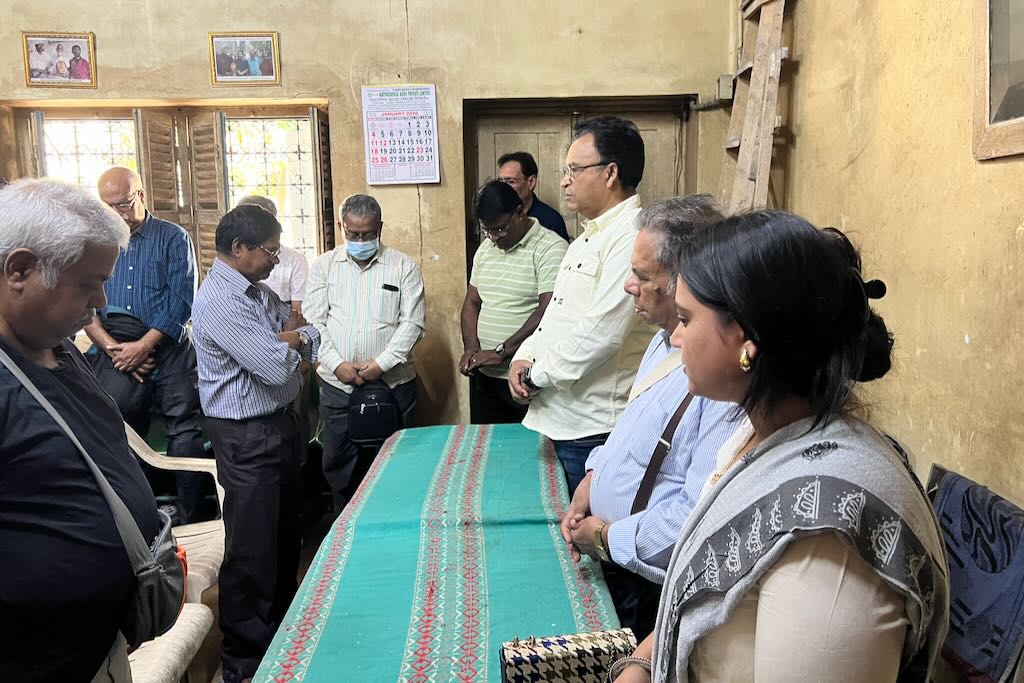
The meeting commenced with a two-minute silence as a mark of respect for the late Mr. Dilip Kumar Ghosh, an active member of the Core Committee. The attendees observed the silence in remembrance of his contributions and expressed their condolences.
Agenda
- Board Reconstitution and Induction of Additional Directors
- Adoption of Contractor-Based Development Model under SPV Structure
- Proposed Collective Visit to Project Site
Agenda-wise Discussion Summary
1. Board Reconstitution and Induction of Additional Directors
The Chair informed attendees about the NCLT Order dated 02.08.2023, under which development responsibility was entrusted to Baruipur Bloomfield City Limited (BBCL) with a stipulated timeline up to 01.08.2026.
Concerns raised during discussion included:
- Lack of visible administrative progress
- Reduced communication from the Board since the General Meeting held in August 2025
- Need for compliance, coordination, and execution within the remaining timeline
It was discussed that strengthening governance capacity may support timely compliance and execution within the NCLT-mandated period.
The proposed names for induction as Directors were read aloud.
Opportunity was given to attendees to express their views.
2. Adoption of Contractor-Based Development Model under SPV Structure
The Chair placed before the attendees the background of the NCLT Order dated 02.08.2023 and the SPV structure under which BBCL is operating.
Discussions included:
- Preservation of land ownership within BBCL
- Avoidance of transfer of development rights outside the SPV
- Ensuring milestone-based payments
- Maintaining compliance with the NCLT Order
- Ensuring contractual safeguards and Board supervision
It was clarified that the resolution adopts a development structure principle and does not approve any specific contractor.
Opportunity was given to attendees to express their views.
3. Proposed Collective Visit to Project Site
It was informed that a collective visit to the project site may be organized on the following Saturday for inspection of the current situation.
Details regarding time and coordination were not discussed in detail.
Decisions Taken
Resolution 1 – Board Reconstitution and Induction of Additional Directors
The meeting unanimously resolved to recommend the induction of the following individuals, being either plot holders or their duly authorized representatives, as Directors of BBCL, subject to applicable statutory compliance:
- Dr Anand Sagar – Plot C180
- Amitabha Mondal – Plot B041
- Sanjoy Roy – Plot B117
- Harmeet Singh Anand – Plot C024
- Dinabandhu Mondal – Plot C022
- Subash Dey – Plot B140
- Subash Chandra Bhadra – Plot A344
- Santi Dey – Plot A190
The existing Board was formally requested to:
- Consider and implement the recommendation
- Convene necessary Board Meeting(s)
- Pass appropriate resolutions
- Initiate statutory filings with the Registrar of Companies
- Complete induction formalities within 7 (seven) days from the date of the Resolution
It was further resolved that, in the event of non-implementation within 7 days, appropriate intervention, including filing before the Hon’ble NCLT, may be initiated as per applicable law.
The resolution was read aloud and passed with majority support of attendees present.
Resolution 2 – Adoption of Contractor-Based Development Model
The meeting unanimously resolved to adopt, in principle, a Contractor-Based Development Model under the SPV structure, wherein:
- Land ownership remains vested in BBCL
- No transfer of development rights takes place outside the SPV without explicit legal safeguards
- All contracts are executed by BBCL under Board supervision
- Payments are milestone-linked and performance-based
- Appropriate contractual safeguards are incorporated
- The development framework remains within the jurisdictional structure of the NCLT Order dated 02.08.2023
It was clarified that no specific contractor was approved at this stage.
The resolution was read aloud and passed with majority support of attendees present.
Action Items
Existing Board of Directors
- Consider and implement the recommended induction of additional Directors
- Convene necessary Board Meeting(s)
- Initiate statutory filings with the Registrar of Companies
- Complete induction formalities within 7 days
Concerned Plot Holders (Conditional)
- Initiate appropriate legal intervention, including filing before NCLT, in the event of non-implementation within 7 days
Way Forward / Next Steps
- Await response and action from the existing Board within 7 days regarding induction of recommended Directors
- Board to evaluate and structure implementation framework under Contractor-Based Development Model
- Collective visit to project site proposed for the following Saturday for inspection
These Minutes reflect the discussions and resolutions as conducted during the meeting chaired by Dr Anand Sagar on 21 February 2026.
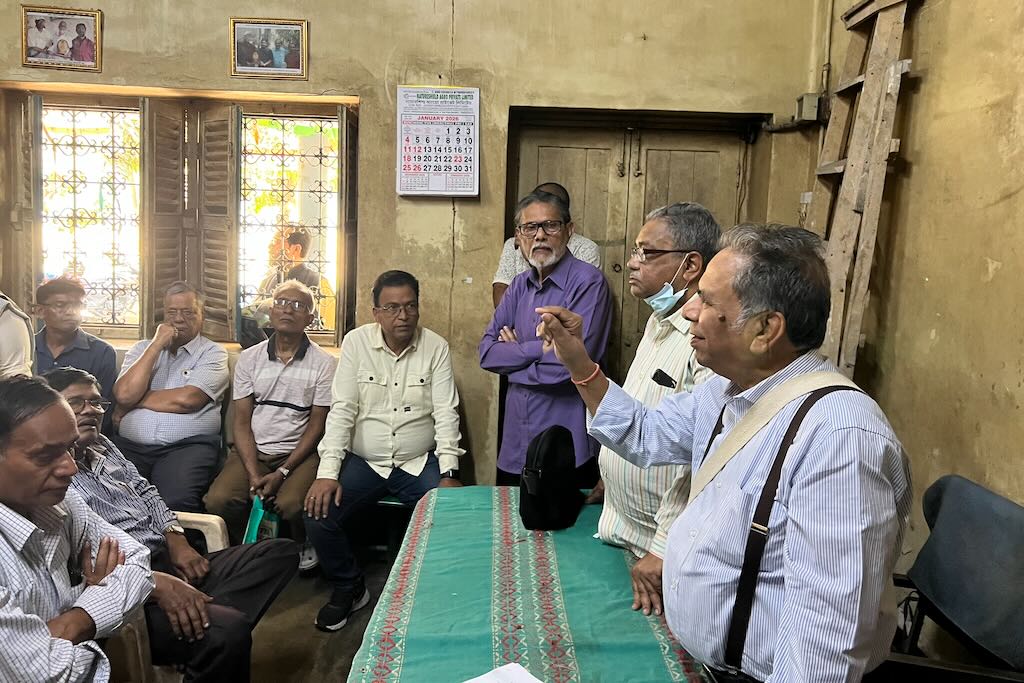
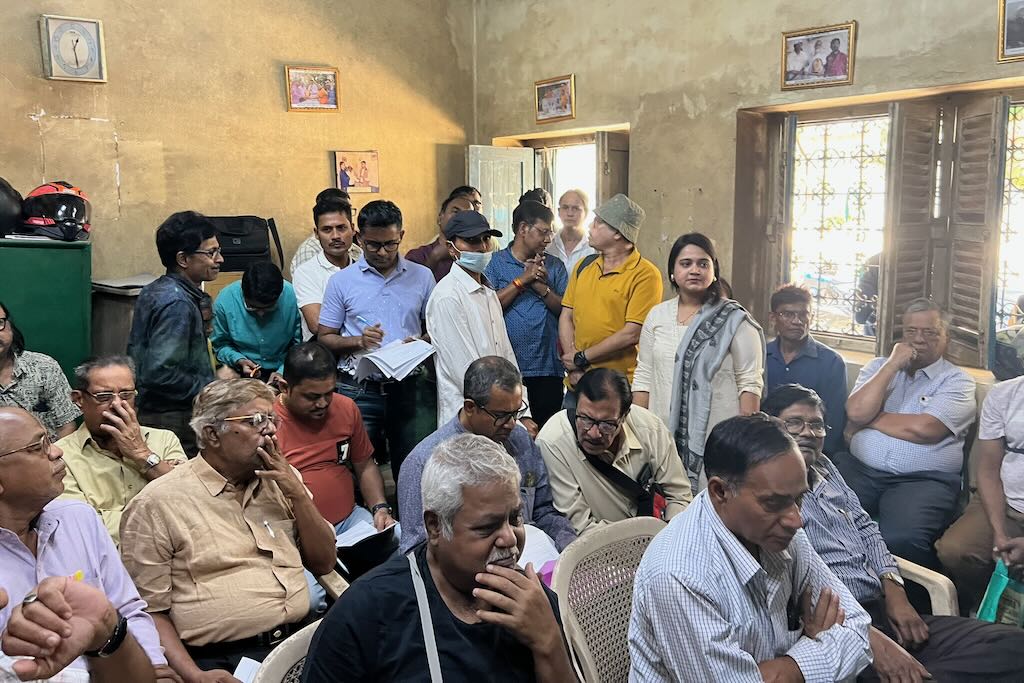
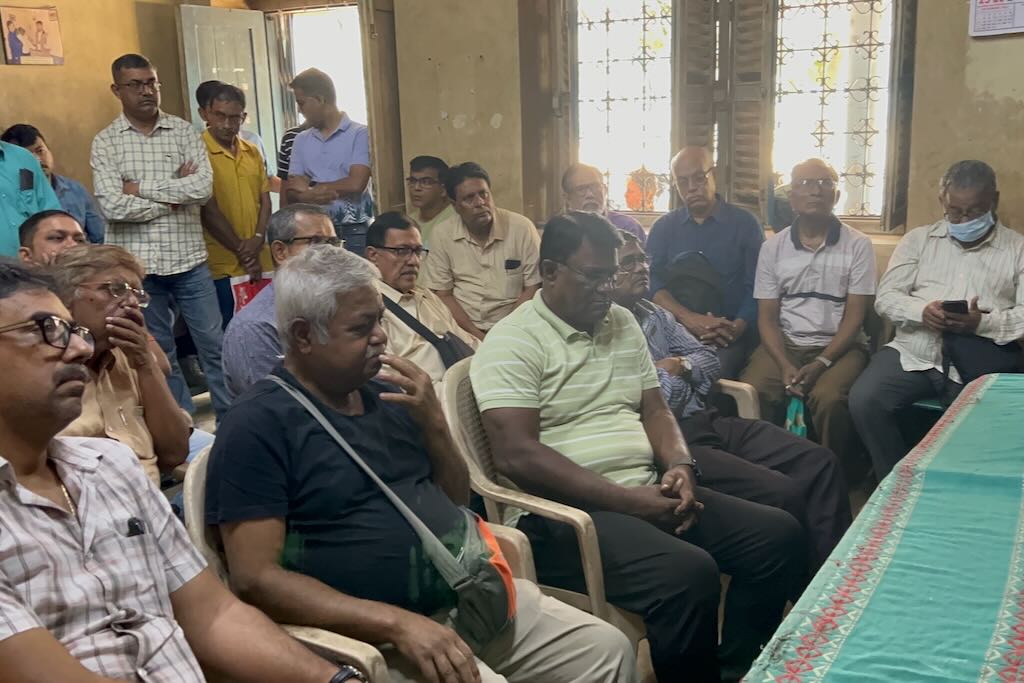
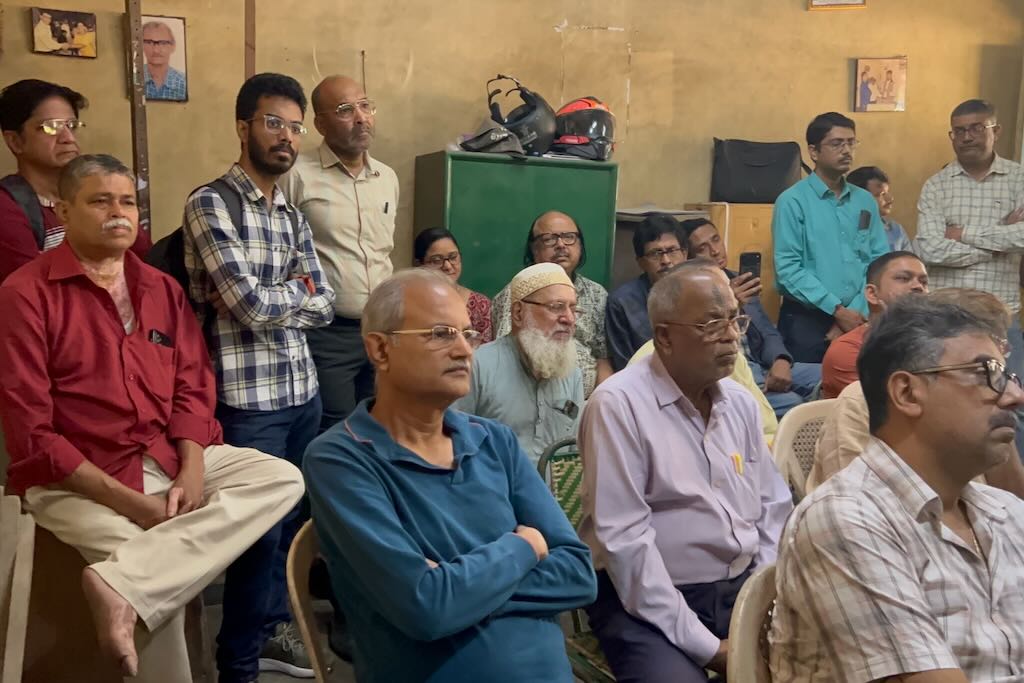
Meeting Photos
Photos 1:
Photos 2:
Photos 3:
Photos 4:
Photos 5:
3.3 - Online Community Meeting – 10 January 2026, 9:00 PM IST
An online community meeting of Save Baruipur Bloomfield City (BBCL) will be held on Saturday, 10 January 2026 at 9:00 PM IST to discuss key community matters in a collective and transparent manner. The meeting will include approval of the previous meeting’s Minutes, discussion on initial land development investment models, updates on share issuance and progress since the August 2025 General Meeting, discussion on vacant governance positions, initial planning for a community picnic in 2026, a practical discussion regarding old furniture from the former Sampark office, and agreement on short-term actions to be completed before the next meeting. All plot holders, including first-time and senior participants, are warmly invited to join the meeting and participate constructively in the discussion.
👉 Join us for an online community meeting – 10 January 2026, 9:00 PM IST
Online Community Meeting Agenda
Date & Time: Saturday, 10 January 2026, 9:00 PM IST
Purpose of the Meeting
This online meeting is being organised to help plot holders stay informed, aligned, and involved in key community matters. The focus is on sharing updates, seeking clarity on pending issues, and discussing practical next steps in a calm and collective manner.
Approval of Minutes of the Previous Meeting (MoM)
This agenda item is to formally review and approve the Minutes of the last meeting. Read Last MOM
- What this is: A confirmation that the written record of the previous meeting accurately reflects what was discussed.
- Why now: Approval ensures continuity and avoids confusion before moving to new topics.
- Expected outcome: Agreement on the MoM or noting any required corrections.
Discussion on Initial Land Development Investment Model
(Developer Model vs Contractor Model)
This agenda item is to discuss the possible approaches for initiating land development work and the associated investment structure.
- What this is: A discussion on whether initial land development should be executed through a developer-led model or a contractor-based model.
- Why now: Early clarity on the development approach is essential before financial planning and execution can begin.
- Expected outcome: Collective understanding of both models and a community-level conclusion on which approach to adopt.
Update on Share Issuance Status
This item is to discuss the current status of share issuance.
- What this is: An update on whether share issuance has been completed, initiated, or is under consideration.
- Why now: Many plot holders are seeking clarity on ownership structure and formal alignment.
- Expected outcome: Clear understanding of the current position and any next steps.
Update on Progress Since the August 2025 General Meeting
This agenda item focuses on understanding what has been achieved since the last General Meeting held in August 2025.
- What this is: A summary of actions, developments, or progress made after the last General Meeting.
- Why now: It helps plot holders assess movement on agreed points and remain informed.
- Expected outcome: Shared understanding of progress, pending items, and overall direction.
Discussion on Filling Vacant Governance Positions
This item is to discuss the current status of vacant positions within the project’s governance structure.
- What this is: An open discussion on unfilled governance roles.
- Why now: Proper governance requires adequate representation and functional role coverage.
- Expected outcome: Clarity on whether steps are being considered to address vacancies and how.
Discussion on Old Furniture from Sampark Office
This item is to inform and discuss the status of old furniture collected from the Sampark office.
- What this is: Information about partially damaged furniture currently stored at the premises of Mr. Manoj Singh, without any rental being paid.
- Why now: The items have been lying unused for a long time, and the space owner has requested that the items be cleared.
- Expected outcome:
- Whether any usable items can be identified for a proposed office setup
- Agreement on disposing of remaining items through a local vendor at a reasonable value
Picnic 2026 – Initial Discussion and Planning
This agenda item is for an early discussion on a possible community picnic in 2026.
- What this is: A preliminary conversation about organising a social gathering for plot holders.
- Why now: Early discussion helps gauge interest and feasibility.
- Expected outcome: Initial ideas, interest levels, and possible volunteers.
Agreement on Short-Term Action Plan Before Next Meeting
This agenda item is to collectively decide on small, achievable actions to be completed before the next scheduled meeting.
- What this is: Identification of limited, practical tasks that can be reasonably completed in the short term.
- Why now: Small, focused actions help maintain momentum and avoid delays between meetings.
- Expected outcome: Clear agreement on a short list of actions to be taken before the next meeting and clarity on follow-up.
Closing Note
All plot holders are encouraged to participate constructively and share their views calmly. Collective discussion and mutual understanding are essential for moving forward together as a community.
Minutes of Meeting
Meeting Title
BBCL Online Community Meeting
Date and Time
10 January 2026, 09:00 PM IST
Platform
Zoom (online)
Participants
- Ritu Sharmistha
- Sanjoy Roy
- Dr Ananda Sagar
- Tapan Mistry
- Ajay Kumar Rathi
- Abhijit Paul
- Abhisek pal
- Imran Asad
- Madusudan Mandal
- Partha Brahma
- Salik hamid
- Soumitra
- Subhash Chandra dey
- Koushik Bhattacharya
- Manoj choudhary
- Kuntal Kumar Mahapatra
- Debdutta Raha
- Molina Jha
- Atashi Maiti
- Sidhartha Roy
- Vikramaditya
- Dipak Kumar Basak
- Pankaj Misra
- Kalpana Chordhury
- Ranjan
Agenda
- Approval of Minutes of the Previous Meeting (MoM)
- Discussion on land development approach (developer model vs contractor/consultant model)
- Status of data and documents to be collected from Mr. Jain’s office
- Funding readiness and preparedness of plot holders
- Governance, communication, and leadership concerns
- Way forward and immediate next steps
Agenda-wise Discussion Summary
Approval of Minutes of the Previous Meeting (MoM)
The MoM of the previous meeting was referenced as having been shared earlier. Members were invited to raise objections, if any. No specific objections were raised during the discussion.
Outcome: No objection raised; MoM considered approved.
Discussion on Land Development Model (Developer vs Contractor/Consultant)
Multiple participants shared views on the preferred development model.
- One participant expressed support for a contractor/consultant-led model, citing concerns about profit margins, accountability, and risk concentration in a developer-led model.
- Another participant indicated acceptance of the proposed model shared earlier, emphasizing the need for timely execution given NCLT timelines.
- Time constraints under the NCLT process were highlighted, with limited scope to explore multiple developer options.
- Concerns were raised about the large number of plot holders with varying payment and registration statuses and the need for readiness to respond quickly to future payment demands.
Outcome: Discussion held; no final decision taken.
Funding Readiness and Plot Holder Preparedness
Participants emphasized the importance of financial preparedness among plot holders.
- Members were advised to keep funds ready to meet future development-related demands within short notice.
- It was stated that prolonged discussions without execution could further delay progress and increase costs.
Outcome: No decision taken.
Governance, Communication, and Leadership Concerns
Concerns were raised regarding governance structure, responsiveness, and communication.
- Some participants expressed dissatisfaction with past processes, including representation during the NCLT process and the formation of leadership bodies.
- Issues of transparency, communication gaps, and lack of responsiveness from certain stakeholders were highlighted.
- Some members expressed the view that the existing Board of Directors has not been able to demonstrate measurable progress following the NCLT order dated 02.08.2023 and has not been providing regular updates or responses to plot holders.
- Based on this, some participants were of the opinion that reconstitution of the Board of Directors should be considered so that active leadership and effective coordination can be ensured.
- Clarification was provided that the SPV/company structure carries responsibility and that initial signatories do not hold special legal rights beyond shareholding.
- Suggestions were made to formally communicate with concerned parties and set timelines for responses.
- It was decided that members of the community will personally write to each of the five Directors, requesting them to meet with the plot holders and provide an update on actions taken after the NCLT order dated 02.08.2023 and after the last General Meeting held in August 2025.
Outcome: Decision recorded to initiate direct communication with all five Directors seeking updates and engagement.
Status of Data Collection from Mr. Jain’s Office
An update was provided regarding the collection of data and documents from Mr. Jain’s office.
- The assigned member informed the group that due to personal commitments, the task could not be completed yet.
- A commitment was reiterated to follow up with Mr. Jain in the coming week to attempt to collect the requested information.
Outcome: Task pending; follow-up planned.
Decisions Taken
- Approval of the previous meeting’s MoM (no objections raised).
- No other decisions taken.
Action Items
- Assigned member to follow up with Mr. Jain’s office to collect requested data and documents (timeline: following week).
Way Forward / Next Steps
- Follow up on data collection from Mr. Jain’s office.
- Continue discussion on development model in subsequent meetings.
- Explore formal communication mechanisms to address governance and coordination concerns.
- Identify and prioritize short-term actions to be completed before the next meeting.
Next Meeting
Date: Saturday 14-Feb-2026 9 PM IST
Remarks
This Minutes of Meeting (MoM) has been prepared based on the meeting recording using automated transcription tools and subsequently reviewed for clarity and accuracy. The MoM is issued as a draft and will be placed for confirmation and approval in the next meeting, including incorporation of any modification or correction requests from members.
Meeting Video
Watch the full meeting video in YouTube
3.4 - Online Community Meeting – 23 December 2025, 9:00 PM IST
This community meeting is being held to review the previous meeting record, understand the current status of owner, land, and document data, and discuss practical steps needed to move forward. The focus will be on clarity, preparation, and small actionable decisions that can be taken collectively before the next meeting. All participants are encouraged to join, stay informed, and contribute constructively.
👉 Save Baruipur Bloomfield City: A Call to Action for All Plot Holders
Community Meeting Agenda – Purpose & Context
This meeting is being held to help community members clearly understand the current situation, review shared information, and decide on practical next steps together. The focus is on clarity, preparedness, and small but meaningful actions that can move work forward in a transparent and collective way.
Agenda Items
Last MoM (Minutes of Meeting)
What this topic is:
This item is about reviewing, confirming, and approving the Minutes of Meeting
(MoM) from the last community meeting. The MoM is the written record of what was
discussed and agreed upon earlier. The link to the last MoM is shared so
everyone can read it beforehand.
Why it needs discussion:
If the previous MoM is not confirmed, there can be confusion later about what
was actually agreed. Approval ensures that all members have a common
understanding of past discussions and decisions.
Expected outcome:
The meeting should aim to confirm whether the MoM accurately reflects the last
meeting. If there are corrections, they should be noted clearly so the record
can be finalized.
Owner & Land Data
What this topic is:
This agenda point focuses on the need to collect and organise complete data
about plot owners, payments, and land status. This includes who the plot holders
are, how much has been paid, what remains unpaid, which land is registered, and
which land is still pending registration.
Why it needs discussion:
Without reliable data, it is not possible to plan development, work with
contractors, or decide on phased progress. Land parcels are not all in one
place, so identifying areas with maximum completed purchase is important before
any development can begin.
Expected outcome:
The discussion should aim to agree on the importance of collecting this data and
outline how the community can take responsibility for having accurate, usable
information instead of depending only on outside parties.
Document Storage
What this topic is:
This item is about where and how important physical documents and records should
be stored. At present, most documents are held elsewhere, and the community does
not have direct access to them.
Why it needs discussion:
Without a secure and accessible place to keep documents, the community cannot
review records when needed. For a large project, it is reasonable to have a
dedicated space, either through volunteer support or a rented location.
Expected outcome:
The meeting should aim to explore practical options for document storage and
agree on whether a volunteer space or a small rented facility is more suitable.
Legal Compliance
What this topic is:
This agenda point is about reviewing legal and financial documents related to
NCLT proceedings, the limited company, and any associations involved.
Why it needs discussion:
Understanding these documents helps the community know where it stands legally
and financially. Without review, important gaps or issues may go unnoticed.
Expected outcome:
The goal is to agree on the need for a clear review process and identify what
reports or documents should be checked first for better clarity.
Next Action (One-Week Plan)
What this topic is:
This item focuses on deciding what small, realistic actions can be taken in the
next one week before the next Tuesday meeting.
Why it needs discussion:
Large goals can feel overwhelming, especially in uncertain situations. Small,
time-bound actions help maintain momentum and confidence.
Expected outcome:
The meeting should aim to identify a few simple, actionable steps that can be
realistically completed within one week and reviewed in the next meeting.
Closing Note
All participants are encouraged to listen carefully, share views respectfully, and focus on understanding the issues rather than assigning blame. Constructive participation and clarity-driven discussion will help the community move forward together.
Minutes of Meeting (MoM)
Meeting Title
Save Baruipur Bloomfield City (BBCL) – Weekly Community Meeting
Date and Time
Date: 23 December 2025 Time: 9 PM IST
Platform
Online meeting (Zoom)
Participants
- Amitabha Mandal
- Dr Ananda Sagar
- Tapan Misry
- Ujjal Kumar Datta
- Sanjoy Roy
- Ritu Sharmistha
- Subhash Chandra Dey
- Totan Sarkar
- Vaskar Basu
- Ranjan Chowdhury
- Pankaj Misra
- Mrinmoy Das
- Nicky Singh
- Siddartha Roy Chowdhury
- Ritabrata
- Manas Gharai
- Mukesh Roy
- Madusudan Mandal
- Jyotirmoy Naskar
- S Kumarjit Singh
- Sikha Nath
- Subhash Chandra Bhadra
- Dinabandhu Mandal
Agenda
- Review and confirmation of Minutes of Meeting (MoM) from the previous meeting
- Importance of regular meetings and participation of core committee and directors
- Organizational infrastructure required to move the project forward
- Update on communication with directors
- Discussion on development approach and engagement with experienced members
- Availability, collection, and storage of project records
- Preconditions before entering into any agreement with third parties
- Open floor for comments from plot holders
Agenda-wise Key Discussion Points
1. Review of Previous Meeting MoM
- The meeting began with a proposal to review the MoM of the last meeting.
- Participants were asked to raise any concerns or corrections.
- No specific objections or changes were raised during the discussion.
2. Regular Meetings and Participation
- Members emphasized the importance of regular weekly meetings for open discussion and coordination.
- It was stated that meaningful progress requires active participation from core committee members and directors.
- The authority granted to plot holders under the CIRP/NCLT process was noted as the basis for these discussions.
3. Organizational Infrastructure Requirements
- A participant outlined basic organizational needs, including:
- Registration and annual renewal of an association
- Conducting Annual General Body Meetings
- Issuing formal notices to members
- Formation and approval of an executive committee
- Appointment of an auditor
- Submission of annual reports and audited accounts
- Maintenance of a bank account, PAN, and statutory filings
- Preparation and circulation of Minutes of Meetings
- The need for an office setup with limited staff support was discussed to manage routine administrative work.
4. Update on Communication with Directors
- It was shared that emails were sent inviting all directors to attend the meeting.
- One director responded stating inability to attend due to being outside India.
- No responses were received from other directors.
5. Development Approach and Inclusion of Experienced Members
- Participants reiterated that the original submission to NCLT committed plot holders to develop the project themselves.
- The importance of engaging experienced past contributors (“old guard”) along with current active members was emphasized.
- Speakers highlighted the need for consensus-based decisions and avoidance of confrontation or misinformation.
- It was stated that constructive criticism raised earlier was not personal and intended to encourage participation.
6. Collection and Storage of Project Records
- Members discussed the lack of access to complete project records, including land records, registrations, and payment details.
- It was noted that records are currently held at another office, and the absence of a physical office has delayed access.
- Two interim options were discussed:
- A member volunteering space to temporarily store records with safeguards
- Renting a small space at minimal cost for record storage
- The importance of keeping sensitive documents secure was highlighted.
- Digitization of records was mentioned as a future need.
7. Preconditions Before Any Agreement
- It was emphasized that before entering into any agreement with third parties,
clarity is required on:
- Amounts collectable from plot holders with pending payments
- Status of land ownership and registrations
- Authorization from registered plot holders
- Members stated that without complete and accurate records, no agreement can be finalized.
8. Open Floor and Member Inputs
- A representative of a plot holder expressed encouragement about the meetings and supported efforts to bring all stakeholders together.
- Participants reiterated support for collective action and continued dialogue.
- Some members faced connectivity issues and could not fully participate.
Decisions Taken
The Minutes of Meeting (MoM) from the previous meeting were approved without any objections.
It was agreed that efforts will be made to engage Directors and senior/experienced members (“old guards”) and encourage their active participation in ongoing discussions.
It was agreed that, for the time being, all sensitive original project records will continue to be kept at Mr. Jain’s office until a dedicated and secure storage location is arranged.
The group agreed to initiate the collection of photocopies of all available physical records, without moving or disturbing the original documents.
It was agreed that Dr. Anand Sagar will take the initiative to obtain available digital data from Mr. Jain and share it with the team for review.
It was agreed that informal, explanatory articles will be shared with plot holders to compare the developer-led model and contractor-led model, to improve general understanding.
Action Items
To Be Completed Before the Next Meeting
Engagement with Directors and Senior Members
- Follow up with Directors and senior/experienced members to invite and encourage active participation.
- Responsible: Meeting organizers / core group (names not specified)
Status of Record Storage
- Confirm continued safe custody of original records at Mr. Jain’s office and note any access constraints.
- Responsible: Core group (names not specified)
Photocopying of Physical Records
- Identify the list of available physical records and initiate photocopying without relocating originals.
- Responsible: Volunteers / core group (names not specified)
Collection of Digital Records
- Coordinate with Mr. Jain to obtain available digital records and circulate them among the team.
- Responsible: Dr. Anand Sagar
Preparation and Sharing of Informal Articles
- Prepare and circulate simple, non-technical articles explaining and comparing the developer model and contractor model for plot holders.
- Responsible: Ritu Sharmistha
Way Forward / Next Steps
- Formally confirm the previous meeting’s MoM once any pending comments are received.
- Continue discussions on record management and organizational setup in upcoming meetings.
- Work toward improved participation from core committee members and directors.
- Focus on information gathering before considering any development or third-party agreements.
Next Meeting
Date: Saturday 10-Jan-2026 9 PM IST
Note: Due to year-end celebrations, the meeting scheduled for next week will be skipped. The next meeting will be scheduled on a Saturday, as requested by several plot holders. The final date will be discussed and confirmed separately.
Remarks
This Minutes of Meeting (MoM) has been prepared based on the meeting recording using automated transcription tools and subsequently reviewed for clarity and accuracy. The MoM is issued as a draft and will be placed for confirmation and approval in the next meeting, including incorporation of any modification or correction requests from members.
Meeting Video
Watch the full meeting video in YouTube
3.5 - Online Community Meeting – 16 December 2025, 9:00 PM IST
After years of limited progress, the Save Baruipur Bloomfield City Campaign is inviting all plot holders to a crucial online community meeting on Tuesday, 16 December 2025 at 9 PM IST.
This meeting is being organised with a forward-looking purpose: to prepare a clear action plan and form a supporting team that can help move the project ahead where progress has stalled.
👉 Save Baruipur Bloomfield City: A Call to Action for All Plot Holders
Not Against Anyone — For Everyone
This initiative is not targeted against any existing team or individual. It is a constructive step to complement existing efforts and ensure that all plot holders have a voice in shaping the way forward.
Breaking the Deadlock
For a long time, BBCL has remained in a state of uncertainty due to lack of movement. This meeting is meant to break that deadlock, not by blaming the past, but by focusing on what can be done next.
Focus on the Future, Not Past Failures
Participants are requested to:
- Avoid revisiting past disputes or failures
- Focus on future-oriented solutions
- Discuss what actions are possible now
- Suggest practical steps to overcome earlier mistakes
The goal is progress — not fault-finding.
What Will Be Discussed
During the meeting:
Plot holders will be invited to briefly introduce themselves and mention their plot numbers
Participants may share:
- Possible solutions
- Their views on future development
- Whether they are willing to invest further
- What they consider a reasonable level of new investment
Speaking Opportunity & Meeting Discipline
Due to time limits, everyone may not get a chance to speak in one meeting. Those who cannot speak will be prioritised in subsequent meetings.
To ensure fairness and clarity:
- The meeting will follow a strict host-controlled format
- Only one speaker at a time will be allowed
- Participants are requested to prepare concise questions or suggestions
- Each speaker may get a limited time, so that others are also heard
These controls are necessary to avoid chaos, cross-talk, or confusion, and to make the meeting effective for all age groups.
Online Meeting Best Practices (For All Participants)
- Join the meeting on time
- Keep microphone muted unless permitted
- Prepare your points in advance
- Be respectful of differing opinions
- Stay focused on BBCL-related solutions
For details instructions read this
How to Join
The meeting link will be available on the Links page of our campaign website: 🔗 link page
A Collective Responsibility
BBCL belongs to its plot holders. Progress is possible only when ideas, responsibility, and participation are shared.
This meeting is an opportunity to listen, contribute, and move forward together.
We look forward to your participation.
Minutes of Meeting
Meeting Title
BBCL Community Discussion on Transparency, Governance, and Development Model
Date: 16-Dec-2025
Time: 9PM IST
Platform: Zoom
Facilitator: Sanjoy Roy
Participants
Total Participants: 30 (including the following attendees)
- Dr. Anand Sagar
- Amitabh Mandal
- Tapan Misry
- Sanjoy Roy
- Sharmistha Sarkar
- Ajay Kumar Rathi
- Harmeet Singh
- Abhijit Pal
- Ujjal Datta
- Rajendra
- Totan Sarkar
- Moli Jha
- Dinabandhu Mandal
- Biswadeep Banerjee
- Subhash
- Partha Pratim Sengupta
- Manas Gharai
- S. K. Sinha
- Siddhartha Roy
(Other participants attended but may not have been individually recorded.)
Agenda
- Purpose and principles of the BBCL discussion platform
- Background work required before development
- Governance and legal compliance status
- Update on meeting with Mr. Kamal Jain
- Discussion on development model and proposal by Mr. Arun Kedia
- Way forward and continuation of discussion
Agenda 1: Purpose of the Platform
Discussion
- The platform has been created to enable transparent, open communication among all plot holders.
- Decisions should reflect majority opinion, with clarity on who supports or opposes each decision.
- The platform is provided free of cost to facilitate collective decision-making.
Decision
✔ The platform will be used for open discussion and transparent majority-based decision-making.
Agenda 2: Background Work Before Development
Discussion
It was highlighted that significant pre-development groundwork is pending.
Two major areas were identified:
Compliance with NCLT requirements, as documented in the July MoM prepared earlier.
Formation and proper functioning of a registered association, including:
- Registration of the association
- Regular meetings and documented minutes
- Opening a bank account and obtaining PAN
- Conducting General Body Meetings
- Periodic election of committee members (not exceeding three continuous years)
It was emphasized that a project of this scale requires an independent office, not operating from an individual’s premises.
Recommendation
➤ Complete legal, regulatory, and organizational groundwork before appointing contractors or starting physical development.
Agenda 3: Governance and Administrative Requirements
Discussion
Concerns were raised about dormant bank accounts and incomplete statutory filings.
Need for proper accounting, IT returns, and operational structure was emphasized.
Requirement for funds to cover:
- Office rent
- Administrative staff
- Compliance activities
Suggestion
• Hire legal and accounting professionals for a limited duration to regularize compliance matters.
Agenda 4: Update on Meeting with Mr. Kamal Jain
Discussion
- A group of around 12 members met Mr. Kamal Jain to discuss the development proposal.
- Members requested that the project be developed as a unified group, avoiding internal divisions.
- It was conveyed that over multiple meetings, an increasing number of plot holders appear agreeable to a common development approach.
- Mr. Jain indicated neutrality and stated that plot holders should take an independent collective decision.
Information Update
- No objection was raised by Mr. Jain regarding discussions or timelines mentioned.
Agenda 5: Development Model and Proposal by Mr. Arun Kedia
Discussion
The proposal by Mr. Arun Kedia was discussed as a consultancy-based, phased model, where fees are linked to actual work done.
It was emphasized that:
- Consultancy fees are proportional to work value.
- All groundwork, including legal and development preparation, would be handled systematically.
Members noted that no alternative formal proposals are currently on the table.
Some members requested that the full written proposal be shared with all plot holders for independent review.
Recommendation
➤ Circulate Mr. Arun Kedia’s complete proposal to all members for transparency and informed discussion.
Agenda 6: Way Forward
Discussion
- The meeting time was limited due to the use of a free Zoom account.
- Several members indicated the need for continued discussion and broader participation.
- It was agreed that voices of long-standing members should be heard before concluding discussions.
Decision
✔ The meeting will be continued in the next session at the same time.
Action Items
| Action Item | Responsible | Timeline |
|---|---|---|
| Share detailed proposal by Mr. Arun Kedia with all members | Coordinating team | Before next meeting |
| Compile pending NCLT compliance requirements | Core group | Before next meeting |
| Outline steps for association registration and administration | Core group | Before next meeting |
| Schedule next Zoom meeting | Facilitator | Next week (same time) |
Next Meeting
- Date & Time: Tuesday 23-Dec-2025 9PM IST
- Mode: Zoom
Remarks
This Minutes of Meeting (MoM) has been prepared based on the meeting recording using automated transcription tools and subsequently reviewed for clarity and accuracy. The MoM is issued as a draft and will be placed for confirmation and approval in the next meeting, including incorporation of any modification or correction requests from members.
Meeting Video
Watch the full meeting video in YouTube
4 - NCLT Insights & Legal Guidance
Stay updated with all NCLT-related developments that impact BBCL. This section explains court orders, monitoring committee mandates, legal rights of plot holders, compliance requirements, and how different development models affect ownership and protection under insolvency law. Written in simple language, it helps every plot holder understand the legal roadmap and make informed decisions.
4.1 - BBCL Before Insolvency: What Really Happened
Many plot holders are still unsure why the Baruipur Bloomfield City (BBCL) project stopped and how it reached insolvency. This confusion is natural because the project structure was complex and not clearly explained to buyers at the beginning. Understanding what happened before insolvency helps plot holders see the real reasons for delay, confusion, and risk—and also helps everyone make better decisions going forward.
This article explains the situation in very simple language, without legal terms, so that every plot holder can understand how the project worked, where it failed, and why this history matters today.
👉 BBCL was never a simple, single-company project. It was a network of companies, land parcels, and agreements.
When coordination failed, everything stopped.
Any future solution must:
- Keep land, money, and decisions under one transparent control
- Move phase by phase, not all at once
- Be driven by plot holders themselves, not outsiders
Awareness of this past helps the community make safer, clearer, and more informed choices together.
One Project, But Three Companies
At first glance, BBCL looked like one single township project. Most buyers believed they were dealing with one company. In reality, the project was handled through three different companies working together as a group.
These companies were:
- Suryodaya Realtors Private Limited (SRPL)
- Sampark Land Developers Private Limited (SLDPL)
- Sampark Land and Builders Private Limited (SLBPL)
All three were controlled by the same promoters but existed as separate legal entities.
This matters to plot holders because payments, agreements, and land ownership were spread across different companies. When problems arose, it was not clear which company was responsible for what. This made accountability difficult and later created legal complications for buyers.
Who Owned the Land
Together, the three companies purchased about 139 bighas of land. However, the land status was mixed:
- Around 120 bighas were registered
- About 19 bighas were not registered, though advance payment was made
- Sale agreements existed for about 108–110 bighas
- Sale agreements covering 85.19 bighas of land were not registered in the names of the respective plot holders.
- Sale agreements covering 13.31 bighas of land were registered in the names of the respective plot holders.
Some plots were registered in company names, some were later registered in individual buyers’ names, and some land was still pending registration.
For plot holders, this meant the land was not fully connected or complete. Because some pieces were missing or unregistered, basic development like roads, drainage, and proper boundary marking could not be done smoothly. Even if most land was bought, a few missing pieces could block the entire layout.
How Plot Buyers Paid Money
Marketing of the project was done under SLDPL. Most plot holders paid their installments to SLDPL.
However:
- Sale agreements were often signed with SLDPL
- Final ownership transfer (conveyance) was supposed to be done by SRPL
- The actual land could belong to SRPL or SLBPL
Money collected by SLDPL was shared internally among the group companies. Around ₹9 crore was transferred to SRPL.
For buyers, this created confusion. Payments went to one company, agreements mentioned another, and land ownership involved a third. When things went wrong, buyers did not know whom to approach or hold responsible.
How Work Was Divided Internally
Inside the group, directors had divided responsibilities:
- Some handled land purchase and development work like roads and drainage
- Some handled marketing and administration
- One handled accounts, banking, and legal work
In October 2015, the two directors responsible for land acquisition and development resigned suddenly.
This directly affected plot holders. Once the people managing land and ground work left, development slowed and then stopped. There was no strong replacement system, and coordination broke down.
Why Development Stopped
Development stopped mainly because the land was incomplete and scattered:
- Proper demarcation could not be done
- Roads and drainage could not be built without continuous land
Seeing no visible progress, many plot holders stopped paying further installments. They felt it was unfair to pay without seeing development.
This led to a cash crunch for the companies. Without money, work could not continue. Without work, buyers refused to pay.
This created a deadlock: no development and no payments.
Loans and Financial Stress
To manage the crisis, SLDPL took loans:
- ₹35 lakh from Greenland Projects
- ₹15 lakh from Toddlen Fashions Private Limited
To secure these loans, promoters pledged 76% of their shares across all three companies.
Even with loans, the project did not recover. Costs increased, trust reduced, and work did not restart properly.
For plot holders, this increased risk. The companies became financially weak, and control over shares reduced.
Refund Demands and Legal Pressure
As delays continued, many buyers demanded refunds with interest. Legal notices were sent to SLDPL.
However:
- Most money had already been spent
- Land development was incomplete
The companies were stuck. They could not give possession, and they could not refund money either.
This situation led to official default.
Entry Into Insolvency (CIRP)
In 2020, SRPL itself applied for insolvency under the Insolvency and Bankruptcy Code. The NCLT Kolkata admitted the case on 30 April 2021.
A Resolution Professional (RP) was appointed, and control moved from promoters to the court-supervised insolvency process.
For plot holders, this meant decisions were no longer in the hands of the original promoters. The project came under legal supervision.
What the Resolution Plan Tried to Fix
Plot buyers themselves proposed a resolution plan. The idea was to:
- Form a Special Purpose Vehicle (SPV) made up of plot buyers
- Use the SPV to take control of all three companies together
Why all three? Because land, money, and operations were deeply connected. Fixing only one company would not work.
The simple logic was: one project must be resolved together.
How the Project Was Supposed to Work (Original Design)
Originally:
- SLDPL was to handle marketing, development, plotting, and buying/selling land
- SRPL and SLBPL were to hold land titles and comply with land ceiling laws
- Buyers, SLDPL, and SRPL/SLBPL were to sign tri-partite agreements
This structure needed strong coordination. Once coordination failed, the entire system collapsed.
For plot holders, the complexity meant delays were hard to fix once problems started.
Why This Matters to Plot Holders Today
BBCL failed not because of one single mistake, but due to:
- Fragmented land ownership
- Multiple companies
- Sudden exit of key directors
- Payment deadlock
- Weak execution control
Understanding this history helps plot holders:
- See why insolvency happened
- Understand why collective solutions like an SPV are proposed
- Avoid repeating the same mistakes in future planning
Key Takeaway (In Simple Words)
BBCL was never a simple, single-company project. It was a network of companies, land parcels, and agreements.
When coordination failed, everything stopped.
Any future solution must:
- Keep land, money, and decisions under one transparent control
- Move phase by phase, not all at once
- Be driven by plot holders themselves, not outsiders
Awareness of this past helps the community make safer, clearer, and more informed choices together.
4.2 - Developer vs Contractor: Who Should Control Our Land and Our Money?
For many plot holders, the biggest question today is simple: who controls our land and our money during development? This matters because land is our lifetime asset, and money comes from our own pockets. Once control is given away, getting it back is very difficult.
At first glance, a developer-led model looks fast and attractive. Big promises, fixed timelines, and talk of “investment” sound reassuring. But when we read the details carefully, the picture changes. This article explains, in very simple terms, why a developer-controlled agreement is risky and why a contractor model is safer and more practical for plot holders.
As the Bengali proverb says: “চকচক করলেই সোনা হয় না” — what shines from outside is not always gold.
👉 You waited for your land for more than a decade.
Waiting a little more — with control and protection — is far safer than
rushing into a risky agreement.
There is no shortcut in life.
We must walk carefully to reach safely.
Stay calm. Stay informed.
The Core Question: If We Pay the Money, Why Should We Lose Control?
Let us start with a basic idea.
- In the developer model:
The developer says he will “invest”, owners give land, and the developer controls everything. - In the contractor model:
Owners invest money step by step, and the contractor works under the owners’ control.
Here is the key truth that is often misunderstood:
👉 In Mr. Rajesh Mishra’s proposal, the claim of “₹5 crore investment” is a myth. Under the proposed agreement, plot holders are required to pay substantial amounts within 90 days. Only after collecting this money from us does the developer plan to start work—and then present that spending as his “investment”.
Ask yourself a simple question: Have we been told that the developer will first purchase the remaining land, complete demarcation, allocate plots to all plot holders, and only then—after 6 months or 1 year—ask us to pay? The answer is no.
The reality is the opposite:
- We are asked to pay first
- The developer uses that money to develop the project
- And then claims that he is “investing”
In plain terms, this means:
“You provide the money, I will spend it, but I will keep full control.”
As the familiar Bengali saying goes: সবাই কই মাছের তেলে কই ভাজবে — the fish is being fried in its own oil.
What Real Developer Investment Looks Like (A Simple Example)
Imagine you own 5 katha land in a city.
- A real developer comes.
- He builds a flat using his own money.
- He keeps you in a rented house till construction is complete.
- After completion:
- You get part of the flat.
- He sells his share and makes profit.
👉 You invest ZERO money.
👉 The developer invests everything.
Now compare this with our situation:
- We collectively hold around 120 bigha land, worth tens of crores.
- We are asked to:
- Give land control
- Pay large sums within 90 days
- Accept forfeiture risk
So who is really investing?
If we are paying, then we do not need a developer.
We need a contractor.
Why the Proposed Developer Agreement (of Rajesh Mishra) Is Risky
1. Land Moves Outside NCLT Protection
What it means in simple words:
The agreement asks for:
- Joint Development Agreement
- Power of Attorney (PoA)
- Land purchases in the developer’s name
Why this matters:
Once land control moves to a private developer:
- The land effectively goes outside NCLT supervision
- Court protection weakens
- If something goes wrong, recovery becomes very hard
NCLT exists to protect stakeholders, not to hand over control to one party.
2. Too Much Power in One Hand
The developer gets rights to:
- Relocate plots
- Extend project area
- Use infrastructure meant for existing plot holders
- Sell plots to new buyers
- Decide timelines and sequencing
For plot holders, this means:
- Owners become spectators
- Monitoring committee has no real control
- Promises depend only on trust
Control quietly shifts away from the real owners.
3. Forfeiture Risk: Miss a Deadline, Lose Everything
The agreement clearly says:
- If payment is not made within 90 days
- Plot is forfeited with NO REFUND
This affects:
- Retired people
- Middle-income families
- NRIs with fund-transfer delays
One financial difficulty can wipe out 10–15 years of waiting.
This is punishment, not rehabilitation.
4. Refund Looks Good on Paper, Weak in Reality
Refunds are advertised, but:
- They come after 24–36 months
- Total refund is capped
- It is first-come-first-serve
- After 90 days, surrender option disappears
Many plot holders may never actually receive refunds.
5. Rising and Multiple Payments
Plot holders are asked to pay:
- Around ₹55,000 per katha
- Plus ₹50,000 lump sum
- Plus 18% GST
- Plus future escalation
Money goes upfront, but:
- No escrow-style safety
- No payment linked strictly to work progress
High exposure, low control.
6. Cancellation Without Fair Protection
If payments are delayed:
- Plot is cancelled
- Earlier money is effectively lost
- Shares may also be forfeited
Risk is one-sided. Owners carry all the burden.
7. All Extra Costs Shifted to Plot Holders
After registration, plot holders must pay for:
- Land conversion and mutation
- Boundary walls
- Shared boundary protection
Developer controls the project but avoids responsibility.
8. No Clear Exit If Developer Fails
There is no strong safeguard if:
- Developer delays
- Developer fails
- Developer faces financial trouble
At that point:
- Land control is gone
- NCLT protection is weak
- Plot holders are stuck
Why a Contractor (Arun Kedia) Model Makes More Sense
In a contractor model:
- Land stays with BBCL / plot holders
- NCLT protection continues
- Money is collected step by step
- Contractor is paid only for completed work
- No PoA over land
- No forfeiture of ownership
The contractor:
- Builds roads, drainage, utilities
- Gets paid for work done
- Does not own, sell, or control land
This is simple, practical, and safer.
About “No Alternative” Fear
Some people ask:
“If not this developer, then what?”
This fear is often used to silence questions.
Once upon a time people thought India could not win without Sachin Tendulkar.
India is still winning.
Nothing is indispensable.
There are always alternatives if we keep control and think calmly.
Addressing the Fear and Pressure in Contractor (Arun Kedia) Model
- We will not forfeit your land
- We will not force huge payments in 90 days
- Payments will be phased and affordable
- Registered or unregistered, fully paid or partially paid — no one will be left behind
- If someone cannot invest now due to financial difficulty, options will be created, not punishment
If a developer (Rajesh Mishra) says:
“If you put conditions, I will leave.”
Then the answer is simple:
Thank you for your interest. We have better options.
Final Thought for Plot Holders
You waited for your land for more than a decade.
Waiting a little more — with control and protection — is far safer than
rushing into a risky agreement.
There is no shortcut in life.
We must walk carefully to reach safely.
Stay calm. Stay informed.
Awareness is our strongest protection.
4.3 - New Team, New Ideas – But No Worry About Your Increased Payment
The recent physical meeting of plot holders has opened a new chapter for Baruipur Bloomfield City.
If the current Board accepts the resolution passed by the plot holders, an expanded and more active team will soon join the Board. This is not about replacing individuals - it is about strengthening governance, speeding up execution, and meeting the NCLT timeline responsibly.
However, one concern is repeatedly being raised:
“Will there be forced higher payments?”
Let us address this clearly and responsibly.
👉 There is cautious hope ahead.
Let us move forward responsibly, transparently and united.
The goal is not to pressure anyone. The goal is to complete what was started - with dignity and fairness.
Stay positive. Stay informed. Stay engaged.
1️⃣ No Forced Increase Beyond NCLT Direction
Any financial requirement will strictly follow the framework permitted under the NCLT Order.
There will be:
- No arbitrary escalation
- No unilateral demand
- No coercive pressure
Every step will remain within the legal framework.
2️⃣ Understanding the 14-Year Reality
Fourteen years is a long time.
When many plot holders invested:
- Their family situations were different
- Their financial capacity was different
- Their long-term plans were different
Since then:
- COVID disrupted livelihoods
- Medical emergencies occurred
- Some plot holders are no longer with us
- Many have retired or changed professions
We cannot ignore this human reality.
Development must be sensitive - not mechanical.
3️⃣ Flexible and Humane Approach
If additional contribution becomes necessary within legal limits, the approach will be practical and compassionate:
- Reasonable timeline for payment
- EMI / phased payment facility
- Case-by-case flexibility
- No immediate cancellation mindset
- Adequate opportunity to arrange funds
No decision will be taken against the will of a plot holder without fair opportunity.
4️⃣ Respect for Ownership Rights
We clearly affirm:
- No one’s plot rights will be forcefully taken.
- No coercive surrender of ownership.
- No hidden clauses.
- No unilateral land handover beyond legal structure.
Plot holders remain central to the project.
5️⃣ Assistance in Special Situations
We are aware that:
- Some original investors have passed away
- Legal heirs may be facing documentation complexity
- Some families may want to transfer ownership
- Some may wish to restructure their holding
We will try to make:
- Transfer to legal heirs easier
- Lawful ownership transitions smoother
- Compliance processes transparent
Though the NCLT framework does not provide simple refund mechanisms, we will try to assist genuinely distressed cases within the legal framework wherever possible.
6️⃣ Why This Movement Started
One year ago, many ordinary plot holders felt unheard.
There was confusion. There was lack of clarity. There was silence.
The movement was not for personal gain. It was for:
- Transparency
- Accountability
- Democratic participation
- Respect for small investors
We stood for those whose voices were ignored.
That commitment remains unchanged.
7️⃣ New Energy, Not New Burden
Yes, a new team may bring:
- New ideas
- Better coordination
- Structured execution plans
- Professional consultation
- Faster compliance
But that does not mean new burden.
It means responsible revival.
8️⃣ A Message to Every Plot Holder
Do not panic. Do not fear rumours. Do not assume worst-case scenarios.
We will:
- Act within law
- Respect your rights
- Communicate clearly
- Move collectively
There is cautious hope ahead.
Let us move forward responsibly, transparently and united.
The goal is not to pressure anyone. The goal is to complete what was started - with dignity and fairness.
Stay positive. Stay informed. Stay engaged.
4.4 - Where Do We Stand Today — And What Should We Do Next?
Many plot holders are confused today.
What is the current status of the project? Why is there so much delay? What options do we have? Why are people talking about going to NCLT again?
This article is written to explain everything in simple language.
Even if you read only this article, you should clearly understand:
What has happened so far? Why the situation has reached here? What choices we have? Why your support is important?
Final Thought — This Is About All of Us
This is not about individuals.
This is about:
- Completing what was started
- Making the system work
- Protecting everyone’s interest
👉 A system can only work when its basic steps are completed
👉 If something is incomplete, it needs to be corrected
Quick Summary — What You Need to Know First
Let us start with the most important points:
- The project was already taken to NCLT once to protect plot holders
- NCLT gave a structured solution on 2 August 2023
- A company (BBCL) was created to execute that plan
- Some basic steps like share issuance were expected early
- Even after ~2.5 years, that basic step is still not completed
Because of this:
- Governance is unclear
- Plot holders cannot formally participate
- Decisions remain limited to a few people
Now there are only three possible paths:
- Do nothing → uncertainty continues
- Hope internal resolution happens → possible, but unclear
- Approach NCLT again → structured solution
👉 This is why many plot holders are now considering going back to NCLT.
👉 For that, your feedback and support are very important.
Background — How We Reached This Situation
To understand today’s situation, we must look at the full journey.
From Developer Failure to NCLT
Earlier, the project was under a developer model.
That model failed.
As a result:
- The companies went into liquidation
- The future of the project became uncertain
At that stage, around 25 plot holders approached NCLT.
Their request was simple:
👉 Let the plot holders take control and complete the project.
NCLT Order — A Fresh Start
On 2 August 2023, NCLT passed an order.
This order allowed:
- Creation of a company (SPV)
- Development by plot holders themselves
- A structured and time-bound plan
This was a major opportunity.
👉 The project got a second life.
Formation of BBCL
After the order:
- Baruipur Bloomfield City Limited (BBCL) was formed
- Directors were appointed
- They were expected to implement the plan
The expectation was very clear:
- Complete compliance
- Issue shares
- Build governance
- Start development
What Is Share Allotment — And Why It Matters
This is the most important concept to understand.
What is it?
Share allotment means:
👉 You become an official shareholder of the company
Why is it important?
Without shares:
- You are not formally part of the company
- You cannot vote
- You cannot change directors
- You cannot participate in governance
Simple Example
Think of it like this:
- A society is formed
- But membership is never given
Then:
- 👉 Who will vote?
- 👉 Who will decide?
No one.
Why plot holders should care
If shares are not issued:
- You remain dependent on others
- You cannot exercise your rights
- You cannot bring change
What Has Happened in the Last 2.5 Years
Now let us look at facts.
- NCLT order was passed in August 2023
- BBCL was formed
- But shares have not been issued till today
At the same time:
- Multiple meetings happened
- Plot holders asked for clarity
- Discussions continued
But the most basic step is still pending.
Why This Creates a Problem
Let us understand this carefully.
If shares are not issued:
- There are no formal shareholders
- There is no structured voting system
- Board cannot be changed democratically
So effectively:
👉 Governance remains limited
Even if unintentionally, this creates a deadlock situation.
What Happened Recently — 21 February Meeting
A meeting of plot holders was held on 21 February 2026.
In that meeting:
- Majority supported strengthening the Board
- Proposal was made to add new directors
But:
- That proposal has not been implemented
A Question Every Plot Holder Should Ask
At this point, a simple question arises:
👉 Why has such a basic step like share issuance not been completed in ~2.5 years?
We are not making any allegation.
But it is reasonable to think:
- Is this delay due to complexity?
- Or is it not being prioritised?
Because without shares:
👉 Proper governance cannot start
Why This Matters to You
This is not a technical issue.
It directly affects you.
If things remain unclear:
- Your plot value is at risk
- Project timeline becomes uncertain
- Decisions may not be participative
What Are Our Options Now
Let us keep it simple.
Option 1: Do Nothing
- Situation continues
- No clarity
- No control
Option 2: Wait
- Hope things improve
- But no guarantee
Option 3: Go to NCLT
Same authority that created the structure
Can enforce compliance
Can give direction
Can break deadlock
👉 This is not conflict
👉 This is course correction
NCLT Process — Not a New Case
Many plot holders may be concerned that going to NCLT means starting a completely new case.
That is not the situation here.
- The project is already under an existing NCLT matter
- Any application will be filed as an Interlocutory Application (IA) within the same case
- This means:
- The process is relatively simpler
- The background is already known to the Tribunal
- It may take comparatively less time for directions or clarification
👉 In simple terms: We are not starting from zero — we are requesting the same court to review and guide the existing process.
What Will Be Requested from NCLT (In Simple Terms)
If required, plot holders may request:
- Completion of share process
- Clear governance structure
- Extension of timeline
- Protection of project value
Protection of Project Value
Ensuring that no premature liquidation or auction is initiated without giving plot holders an opportunity to be heard before the Hon’ble NCLT, and that the project assets are safeguarded from value erosion.
Why Your Support Is Important
NCLT looks at facts.
But it also looks at:
👉 Stakeholder voice
Your support helps in:
- Showing ground reality
- Demonstrating majority view
- Strengthening the case
Feedback Form — Your Role
We will be sharing a simple feedback form.
It will ask 3 questions:
- Did you receive shares within 90 days?
- Have you received shares till today?
- Are you satisfied with current progress?
👉 Your honest response is important.
This is not about opinion.
👉 This is about documenting reality.
DOWNLOAD THE FEEDBACK FORM PDF
What Happens Next
- Awareness campaign
- Feedback collection
- General Meeting
- Majority decision
- Next steps accordingly
Final Thought — This Is About All of Us
This is not about individuals.
This is about:
- Completing what was started
- Making the system work
- Protecting everyone’s interest
👉 A system can only work when its basic steps are completed
👉 If something is incomplete, it needs to be corrected
Conclusion — Let Us Stay Informed and United
Every plot holder should:
- Understand the situation
- Think independently
- Participate responsibly
Because in the end:
- 👉 This is our project
- 👉 This is our collective responsibility
Let us move forward with awareness, clarity, and unity.
4.5 - Contractor Model Roadmap 2026 - A Practical Path Forward for BBCL Plot Holders
The Contractor Model Roadmap 2026 proposes a phased approach for restarting the BBCL project by allowing willing plot holders to move forward without indefinitely waiting for all stakeholders. This article explains the proposed Phase I, Phase II, and Phase III framework, including land acquisition, plot allocation, membership freeze dates, infrastructure development, and settlement options in simple language. Understanding the roadmap helps plot holders make informed decisions about participation, timelines, responsibilities, and the practical implications of joining early or later stages of the project.
For many years, BBCL plot holders have faced uncertainty, delays, changing plans, and unanswered questions. As a result, many families are understandably cautious about any new proposal.
The Contractor Model has been designed with one simple objective:
Move forward with the people who are ready, without permanently closing the door for those who need more time.
This article explains the proposed roadmap in simple language so that every plot holder can understand how the model is intended to work, why certain decisions are being proposed, and how the phased approach may help revive the project.
Roadmap at a Glance
The Contractor Model proposes a phased approach to revive the BBCL project.
Instead of waiting indefinitely for every plot holder to make the same decision at the same time, the project is divided into three separate phases based on participation.
The idea is simple:
- Those who are ready to move forward can start now.
- Those who need more time can join later.
- Those who no longer wish to continue may have an exit pathway in the future.
Phase I - Active Participants
This phase is intended for plot holders who are ready to participate immediately.
Key activities include:
- Finalizing participant list
- Land acquisition
- Survey and planning
- Plot allocation
- Registration
- Basic infrastructure development
Estimated timeline:
- Year 1: Land acquisition, planning, allocation, registration
- Year 2: Roads, utilities, and infrastructure
This phase creates the first functional and developable township area.
Phase II - Future Participants
This phase is intended for plot holders who prefer to wait and observe before making a decision.
Phase II follows substantially the same process as Phase I:
- Land acquisition
- Layout planning
- Plot allocation
- Registration
- Infrastructure development
Phase II is expected to begin only after major Phase I commitments are completed.
In practical terms, Phase II may start approximately two years after Phase I begins.
Phase III - Exit and Settlement
Some plot holders may decide that they no longer wish to continue with the project.
Phase III is intended to provide a future framework for voluntary exit and settlement.
Potential sources of settlement funds may include:
- Sale of surplus land
- Sale of surrendered plots
- Future project revenues
- Other approved sources
Because future market conditions cannot be predicted, settlement values cannot be guaranteed in advance.
Why the Three-Phase Approach Is Important
The phased model attempts to balance three different realities:
- Some people want to move forward immediately.
- Some people need more time to decide.
- Some people may wish to exit.
Instead of allowing these different preferences to stall the entire project, the roadmap creates separate pathways for each group while allowing development to continue.
Why a New Roadmap Is Being Proposed
One of the biggest challenges in large projects is that not everyone makes decisions at the same time.
Some people are ready to move forward immediately.
Some want to wait and observe.
Some may no longer wish to continue.
If a project waits indefinitely for every stakeholder to agree, development can remain stalled for years.
The Contractor Model attempts to solve this problem through a phased approach.
The basic principle is simple:
Those who are ready should be able to move forward, while others retain opportunities to participate later.
The Principle of Equal Treatment
One of the most important principles of the roadmap is:
If there is a rule, it must apply equally to all.
Historically, different plot holders may have purchased different plot categories, locations, or premium positions.
However, when a project requires restructuring and fresh planning, selective advantages can create disputes and delays.
The roadmap therefore proposes that all participants follow a common set of allocation rules.
This does not mean previous payments are ignored. Where higher prices were paid for premium categories, those differences can be considered through transparent and uniformly applied methods.
The goal is fairness rather than favoritism.
Why Land Acquisition Comes Before Plot Allocation
Many plot holders ask a simple question:
“Why can’t plots simply be allocated from the existing layout?”
The practical answer is that development requires a usable and contiguous land bank.
Before plots can be allocated, the project must know:
- How many people are participating
- How much land is required
- Which lands are available
- Where roads will be located
- Where utilities will be installed
Only after this information becomes clear can a reliable layout be created.
For this reason, land acquisition and land consolidation are proposed as the first major step.
Why Development Starts Near Baruipur-Amtala Road
The roadmap proposes beginning development from the front side of the project adjoining the Baruipur-Amtala Road.
This is suggested because:
- Road access already exists
- Utility connections are easier
- Construction logistics become simpler
- Costs can be reduced
- Development becomes more visible
- Early residents receive practical access
Instead of spreading resources across fragmented areas, the idea is to create a compact and functional township first.
Phase I - Active Participants
Phase I is intended for plot holders who wish to move forward immediately.
These participants accept that development requires action, coordination, and commitment.
Who Can Join
Any plot holder from any block may participate.
There is no distinction between Block A, Block B, or Block C.
All participating members are treated under the same rules.
Why Phase I Matters
Phase I participants take the earliest risks.
They also help determine:
- Land requirements
- Acquisition priorities
- Layout planning
- Infrastructure planning
- Development timelines
Without sufficient participation, no development model can succeed.
New Plot Allocation System
Under the proposed roadmap, participants may be relocated into the new Phase I development zone.
This means original plot locations may not be preserved.
This is proposed because the objective is to create a practical and compact township rather than replicate a fragmented historical layout.
Plot allocation would therefore be performed through a transparent lottery process.
This approach reduces disputes and ensures equal treatment.
Premium Plot Considerations
Some plot holders originally purchased:
- Corner plots
- Larger road plots
- Lake-facing plots
- Other premium locations
The roadmap recognizes that such plots may have been purchased at higher prices.
However, preserving every historical location may not be practical during restructuring.
Instead, proportional adjustments may be considered through transparent and uniformly applied rules.
No participant receives a guaranteed premium location.
Everyone participates under the same allocation process.
Phase I Membership Freeze Date
A formal Phase I Membership Freeze Date is proposed.
Before this date, interested plot holders should:
- Confirm participation
- Submit required information
- Complete necessary documentation
- Confirm willingness to participate in implementation activities
After the Freeze Date, the Phase I participant list may be locked for planning purposes.
Any person joining later may be considered under Phase II.
Why a Freeze Date Is Important
Without a Freeze Date:
- Land requirements remain unknown
- Acquisition planning becomes difficult
- Road layouts keep changing
- Infrastructure costs become uncertain
- Early participants bear unfair risks
The Freeze Date protects both the project and participating stakeholders.
Special Position of Registered Plot Holders
Some plot holders may already hold registered interests connected to lands that may be required for implementation planning.
For development to proceed efficiently, timely cooperation may be required for documentation, authorizations, and implementation activities.
If such lands are not made available for planning within the prescribed timeline, the project may be unable to include them in Phase I calculations.
As a result:
- Roads may be planned elsewhere
- Utility routes may bypass those lands
- Development layouts may be finalized without relying on those lands
This is not intended as a penalty.
It is simply a practical requirement for planning a large development project within a defined timeline.
Benefits of Joining Before the Freeze Date
Early participation provides several practical advantages.
Participants may receive:
- Earlier plot allocation
- Earlier registration opportunities
- Earlier infrastructure development
- Earlier possession opportunities
- Earlier exposure to future land value appreciation
Perhaps more importantly, early participants help shape the future township.
Those who participate later may need to accept decisions already implemented by the participating community.
Two Major Milestones of Phase I
Milestone 1 - Land and Registration
This stage focuses on:
- Land acquisition
- Survey work
- Layout creation
- Plot allocation
- Registration activities
The objective is to ensure participants receive clearly identified plots.
Milestone 2 - Infrastructure
After land allocation and registration, attention shifts to:
- Roads
- Drainage
- Electricity
- Water supply
- Utility corridors
The goal is to transform allocated land into usable residential plots.
No Phase II activities are proposed until Phase I commitments are substantially completed.
Phase II - Future Participants
Not everyone is comfortable making decisions immediately.
Some plot holders prefer to wait and observe.
The roadmap recognizes this reality.
Phase II is intended for stakeholders who choose not to join Phase I.
What Happens in Phase II
Phase II follows substantially the same framework:
- Land acquisition
- Layout planning
- Plot allocation
- Registration
- Infrastructure development
The same rules apply equally.
The primary difference is timing.
Phase II would begin only after Phase I obligations are substantially completed.
Why Separate Phases Are Necessary
Active participants should not be forced to wait indefinitely.
At the same time, later participants should not lose the opportunity to join.
Separate phases attempt to balance both interests.
Phase III - Exit and Settlement Option
Some plot holders may no longer wish to continue with the project.
The roadmap therefore contemplates an eventual exit pathway.
Who May Use This Option
Plot holders who prefer financial settlement instead of land participation.
How Settlement May Work
Potential funding sources may include:
- Sale of surplus land
- Sale of surrendered plots
- Future project revenues
- Other approved sources
Because future market conditions are uncertain, exact settlement values cannot be guaranteed in advance.
The objective is to provide a fair and practical mechanism whenever resources permit.
Why Transparency Matters
Many BBCL plot holders have experienced years of uncertainty.
Trust can only be rebuilt through transparency.
For this reason, every major step should ideally be:
- Documented
- Publicly explained
- Physically verifiable
- Open to stakeholder review
People are more likely to support a process when they can see tangible progress on the ground.
Collective Awareness and Participation
Every plot holder must ultimately decide what is best for their family and future.
The purpose of the Contractor Model is not to pressure anyone into a decision.
Its purpose is to create a structured framework that allows willing participants to move forward while preserving future opportunities for others.
Whatever view a plot holder takes, one principle remains important:
An informed decision is always better than a delayed decision based on incomplete information.
Understanding the roadmap, asking questions, participating in discussions, and reviewing proposed plans carefully are among the best ways for stakeholders to protect their interests and contribute to the future of the project.
4.6 - BBCL Contractor Model Implementation Coordination Team
The BBCL Contractor Model Implementation Coordination Team is a voluntary group of plot holders working to prepare the groundwork for implementing the proposed Contractor Model. This article explains why the team was formed, what responsibilities it performs, who can join, and how active plot holders can participate in planning, coordination, stakeholder engagement, and project implementation activities.
The Contractor Model can only succeed through active participation from plot holders.
To prepare for implementation, a voluntary Coordination Team has been formed to assist with planning, stakeholder engagement, implementation preparation, and project-related coordination activities.
This page explains the purpose of the team, its responsibilities, current members, and how interested plot holders can become involved.
Why Was the Coordination Team Formed?
Large projects do not move forward through ideas alone.
They require:
- Planning
- Coordination
- Communication
- Documentation
- Stakeholder engagement
- Practical execution
Over the past several months, discussions, meetings, surveys, and stakeholder interactions have indicated significant support among active plot holders for the Contractor Model as a practical path towards project implementation.
As a result, a dedicated Implementation Coordination Team has been formed to help prepare the groundwork required for execution.
What Does the Team Do?
The Coordination Team is a volunteer-driven working group.
Its objectives include:
- Coordinating implementation planning
- Supporting stakeholder communication
- Assisting with project preparation activities
- Supporting governance and compliance-related coordination
- Helping develop practical implementation strategies
- Encouraging transparency and stakeholder participation
- Supporting lawful and orderly implementation efforts
The team does not replace plot holders.
Instead, it acts as a coordination platform for stakeholders who wish to contribute their time and effort towards project revival.
Why Active Participation Matters
Many projects fail because only a small number of people perform all the work while others remain passive observers.
The Contractor Model is based on the belief that project revival requires active stakeholder involvement.
Ideas are important.
Discussions are important.
However, implementation ultimately depends on people who are willing to take responsibility for specific tasks and activities.
Who Can Join?
The team remains open to additional volunteers.
Any plot holder who:
- Supports the Contractor Model
- Wishes to contribute constructively
- Is willing to participate actively
- Is prepared to support implementation efforts
may express interest in joining the team.
Expectations From Team Members
This is a working team, not merely a discussion group.
Members are expected to:
- Attend physical meetings whenever possible
- Participate in online meetings
- Remain responsive on communication platforms
- Contribute positively to planning and coordination activities
- Accept responsibility for specific tasks when required
- Work collaboratively with other stakeholders
The strength of the team depends on active participation rather than membership numbers alone.
How to Join
Plot holders interested in joining the BBCL Contractor Model Implementation Coordination Team may contact the existing team members and express their interest.
Additional volunteers are always welcome.
The objective is simple:
Move from discussion to implementation and work collectively towards the successful completion of the BBCL project.
Collective Participation Builds Stronger Projects
The future of any community project depends not only on plans and proposals but also on the willingness of stakeholders to participate.
Every plot holder may not have the same availability, skills, or interests.
However, even small contributions can help move a project forward.
The Coordination Team is intended to provide a platform where willing stakeholders can work together, share responsibilities, and support the practical implementation of the Contractor Model.
Current Members of the Coordination Team
The following volunteers are currently part of the BBCL Contractor Model Implementation Coordination Team.
These members are contributing voluntarily towards implementation planning and coordination activities.

Ritu Sharmistha
Project Organizer
Dr Anand Sagar
Planning Coordinator
Amitabha Mandal
Planning Coordinator
Tapan Mistry
Implementation Coordinator

Ujjal Dutta
Implementation Coordinator

Sanjoy Roy
Implementation Coordinator
Abhijit Paul
Implementation Coordinator
Ajay Kumar Rathi
Implementation Coordinator

Harmeet Singh Anand
Implementation Coordinator
Shikha Nath
Planning Coordinator
Santosh Kumar Sinha
Planning Coordinator
Mohammedi Rangoonwala
Planning Coordinator
Parthapratim Brahma
Planning Coordinator

Saswati Chakravorty
Volunteer Coordinator
Subhash Dey
Volunteer Coordinator
Dinabandhu Mondal
Volunteer Coordinator
Biswajit Chakravorty
Volunteer Coordinator
Shyamal Kumar
Volunteer Coordinator
Santanu Ghosh
Volunteer Coordinator

Pralay Kumar Bhowmick
Volunteer Coordinator
4.7 - Why Developer Model Is Fundamentally Risky Irrespective of Initial Investment
Many BBCL plot holders are being told that a developer may bring additional investment into the project. While that sounds attractive, investment alone does not eliminate risk. The more important questions are who controls the land, who controls the money, what happens if disputes arise, and whether plot holders are expected to pay similar development charges under both models. This article explains why many stakeholders believe the Contractor Model provides stronger protection, flexibility, and control.
When people hear that a developer may invest crores of rupees, the proposal naturally sounds attractive.
However, before focusing on the size of the investment, plot holders should ask a few simple questions:
- Who controls the land?
- Who controls the money?
- What happens if the project faces difficulties?
- Can the executing party be replaced?
- If plot holders must still pay development charges, what additional benefit is being obtained?
This article explains why many stakeholders believe that the Contractor Model may provide a safer and more practical path for BBCL plot holders.
The Wrong Question
Most discussions begin with:
“How much money will the developer invest?”
But that may not be the most important question.
The more important question is:
“What risks am I taking in exchange for that investment?”
Every plot holder wants development.
However, development should not come at the cost of unnecessary risk.
For most families, the land itself is the most valuable asset.
Therefore, before discussing investment, it is important to understand who controls that asset.
Question 1: Who Controls My Land?
This is the most important question of all.
Contractor Model
Under the Contractor Model:
- The land remains under the control of plot holders.
- Contractors are hired to perform specific work.
- Ownership remains with stakeholders.
- Contractors can be changed if necessary.
- Development can continue even if one contractor fails.
The contractor is simply a service provider.
Developer Model
Under a typical Developer Model:
- Additional powers and authorities may be granted to the developer.
- Development becomes dependent on a single implementing party.
- Stakeholders may have less direct control over future decisions.
- Replacing the developer may become significantly more difficult.
For an ordinary plot holder, the practical question is simple:
If my land is my most valuable asset, why should I voluntarily reduce my control over it?
Question 2: Why Is Power of Attorney Such a Serious Issue?
Many developer-led proposals require some form of Power of Attorney (PoA).
A PoA allows another person or entity to act on your behalf.
Before granting such authority, every plot holder should understand:
- What powers are being granted?
- How long will they remain effective?
- What rights are being transferred?
- What happens if disagreements arise later?
Many stakeholders have expressed concern that once land-related rights and authorities become intertwined with development arrangements, future disputes may become more complicated than they are today.
For an ordinary family, the concern is straightforward:
The more control you give away, the harder it may become to regain that control later.
This is one of the main reasons many stakeholders prefer a model where ownership and control remain directly with plot holders.
Question 3: Who Is Really Paying?
A common argument is:
“The developer will invest money.”
This sounds attractive.
But stakeholders should understand a simple business principle.
Investment is not charity.
Investment normally expects:
- Recovery of capital
- Recovery of costs
- Compensation for risk
- Profit
Therefore, the important question is:
If the developer invests money, how will that money eventually be recovered?
Every stakeholder should clearly understand that answer before making a decision.
Question 4: Are Plot Holders Actually Paying Less?
This is where many stakeholders have started asking practical questions.
Based on current discussions:
- Under the Contractor Model, plot holders may be expected to contribute approximately ₹30,000 per katha.
- Under the Developer Model, plot holders may also be expected to contribute approximately ₹30,000 per katha.
If that is the case, then a very simple question arises:
If I am paying approximately the same amount under both models, what additional benefit am I receiving in exchange for giving up greater control?
Many stakeholders believe this is the single most important question that needs to be answered.
Question 5: What Happens If Things Go Wrong?
Every project has risk.
The real issue is not whether risk exists.
The real issue is:
What happens if the project encounters difficulties?
Contractor Model
If a contractor performs poorly:
- The contractor can be replaced.
- The land remains with plot holders.
- Development can continue with another contractor.
- Stakeholders retain decision-making power.
Developer Model
If extensive rights, powers, or authorities have already been granted:
- Replacing the developer may become more complicated.
- Additional legal processes may be required.
- Stakeholders may have less flexibility to change course.
The difference is not whether problems occur.
The difference is how easily those problems can be solved.
Question 6: Which Model Provides More Transparency?
Most plot holders want simple answers:
- Who is receiving the money?
- Who is spending the money?
- Who approves the work?
- Who verifies the costs?
Under a contractor-based structure, stakeholders generally have more direct visibility into the work being performed and the payments being made.
Many stakeholders therefore believe that the Contractor Model provides a simpler and more transparent structure.
A Simple House-Building Example
Imagine you want to build a house.
Option A
You hire a contractor.
- You own the land.
- You pay for the construction.
- You supervise the work.
- You can change the contractor if required.
Option B
You transfer significant authority to another party.
- You still pay most of the construction cost.
- You become dependent on that party.
- Replacing that party may become difficult later.
Most families would think very carefully before choosing Option B.
Many stakeholders view the BBCL decision in a similar way.
The Real Difference Between the Two Models
The debate is often presented as:
Developer Investment vs No Developer Investment
Many stakeholders believe that this is not the real issue.
The real comparison is:
Contractor Model
- Land remains under stakeholder control.
- No broad transfer of authority is required.
- Contractors can be replaced.
- Financial structure is simpler.
- Risks are generally easier to manage.
Developer Model
- Additional investment may be available.
- Greater dependence on a single party may be created.
- Additional legal arrangements may be required.
- Future changes may become more difficult.
The Final Question Every Plot Holder Should Ask
Before supporting any proposal, every plot holder should ask one simple question:
If I am expected to contribute approximately the same development charges under both models, why should I accept additional risks relating to land control, Power of Attorney, and long-term dependency on a developer?
Every stakeholder may reach their own conclusion.
However, many plot holders believe that the Contractor Model offers a simpler principle:
Keep control of the land.
Hire professionals to do the work.
Replace them if they fail.
Never give away more control than necessary.
For many stakeholders, that is the safest path toward completing the project while protecting both their investment and their land.
5 - Ownership Details
This section provides a clear and organised list of all plot ownership details. Many plot holders often struggle to find accurate records or confirmation of their ownership. To solve this, we are bringing all ownership-related information into one place so that every member can easily verify their plot, stay updated, and avoid confusion.
By keeping ownership data transparent and accessible, we ensure that every plot holder understands their rights, knows their current status, and has the correct information to use during meetings, legal processes, or future development activities.